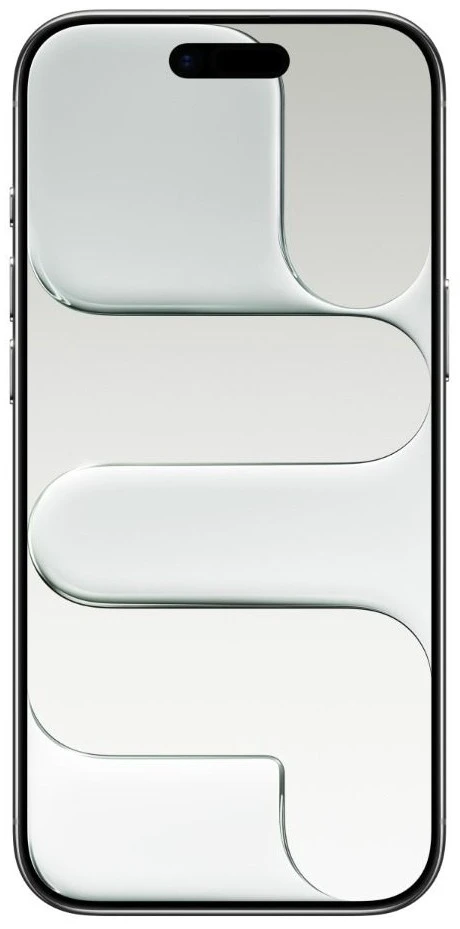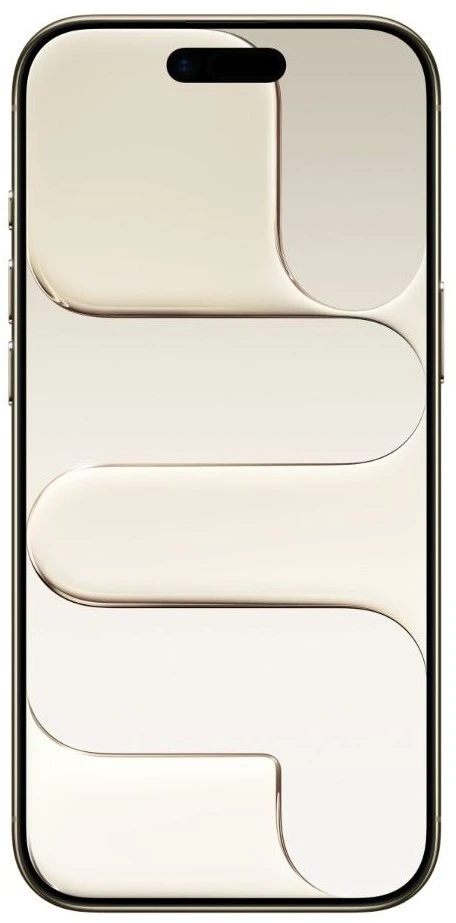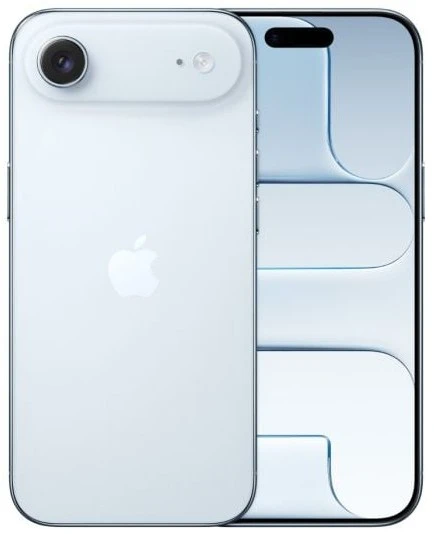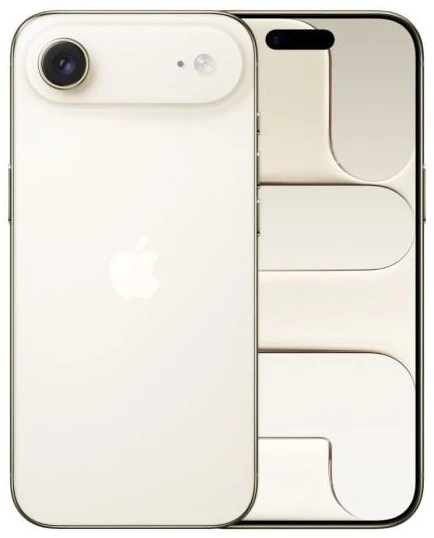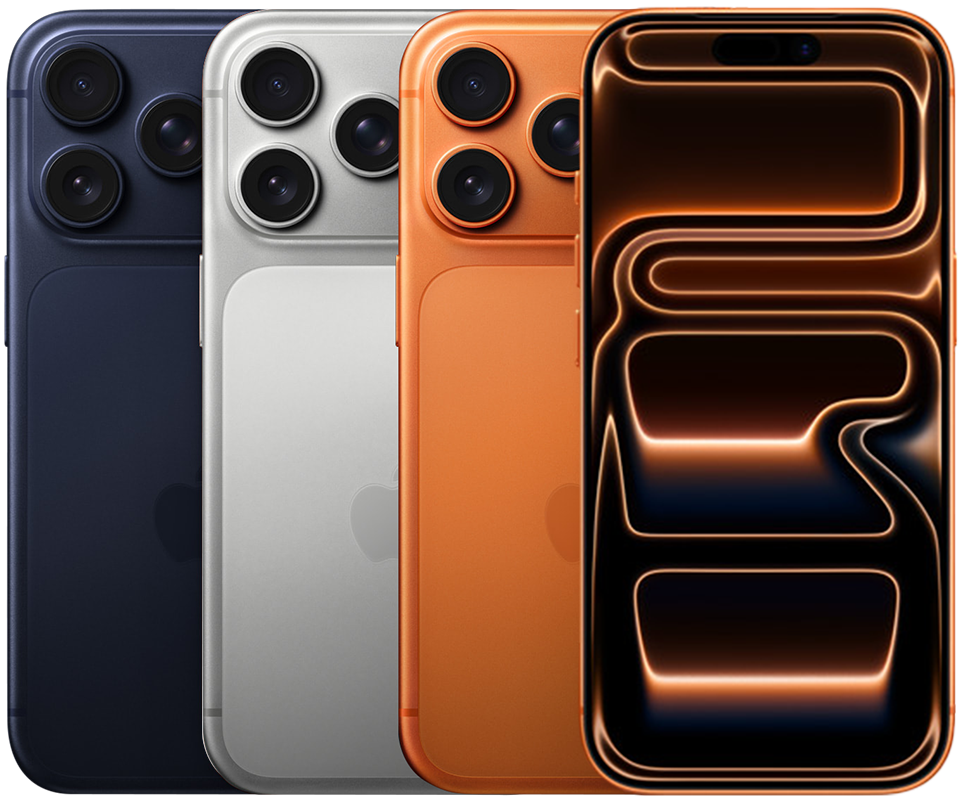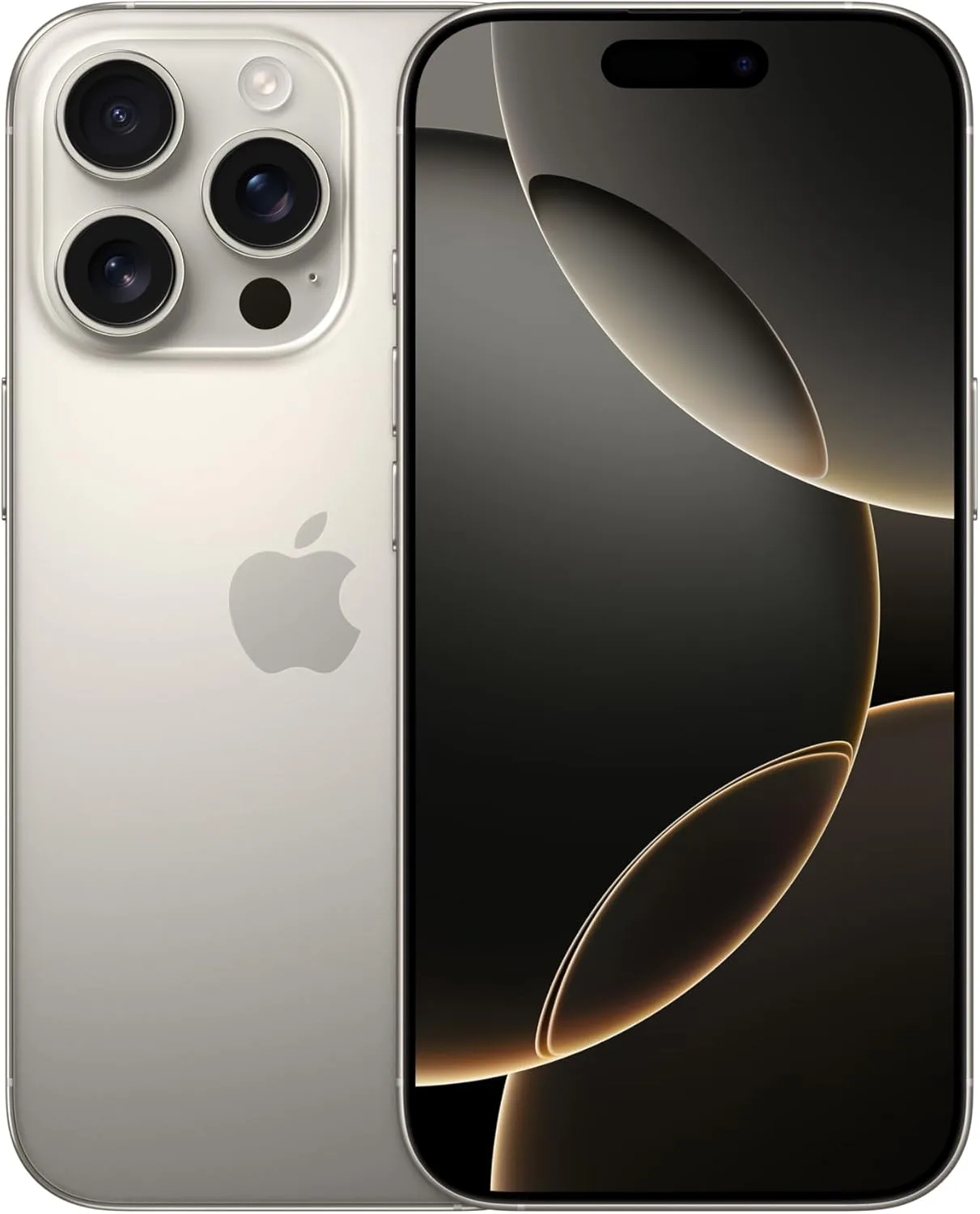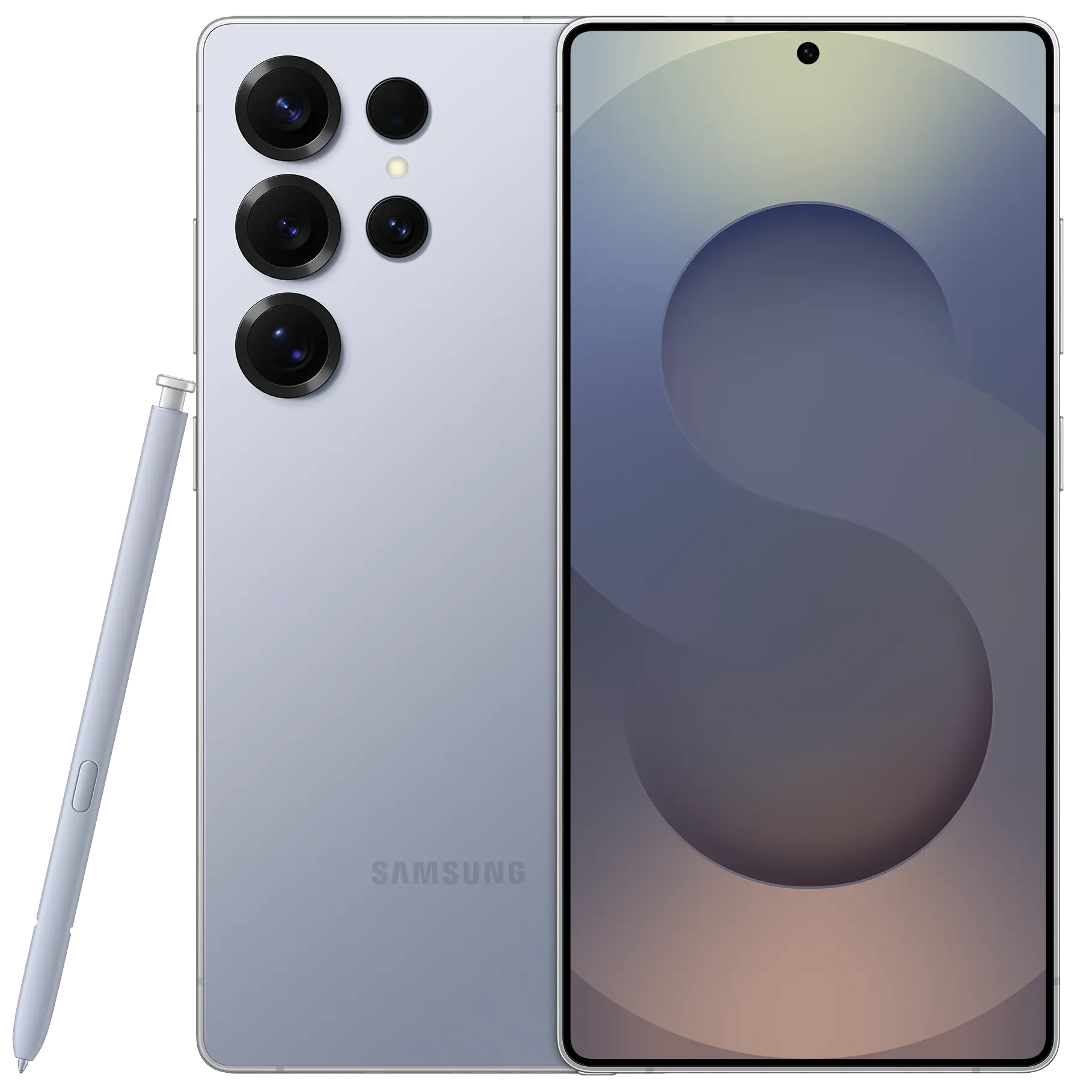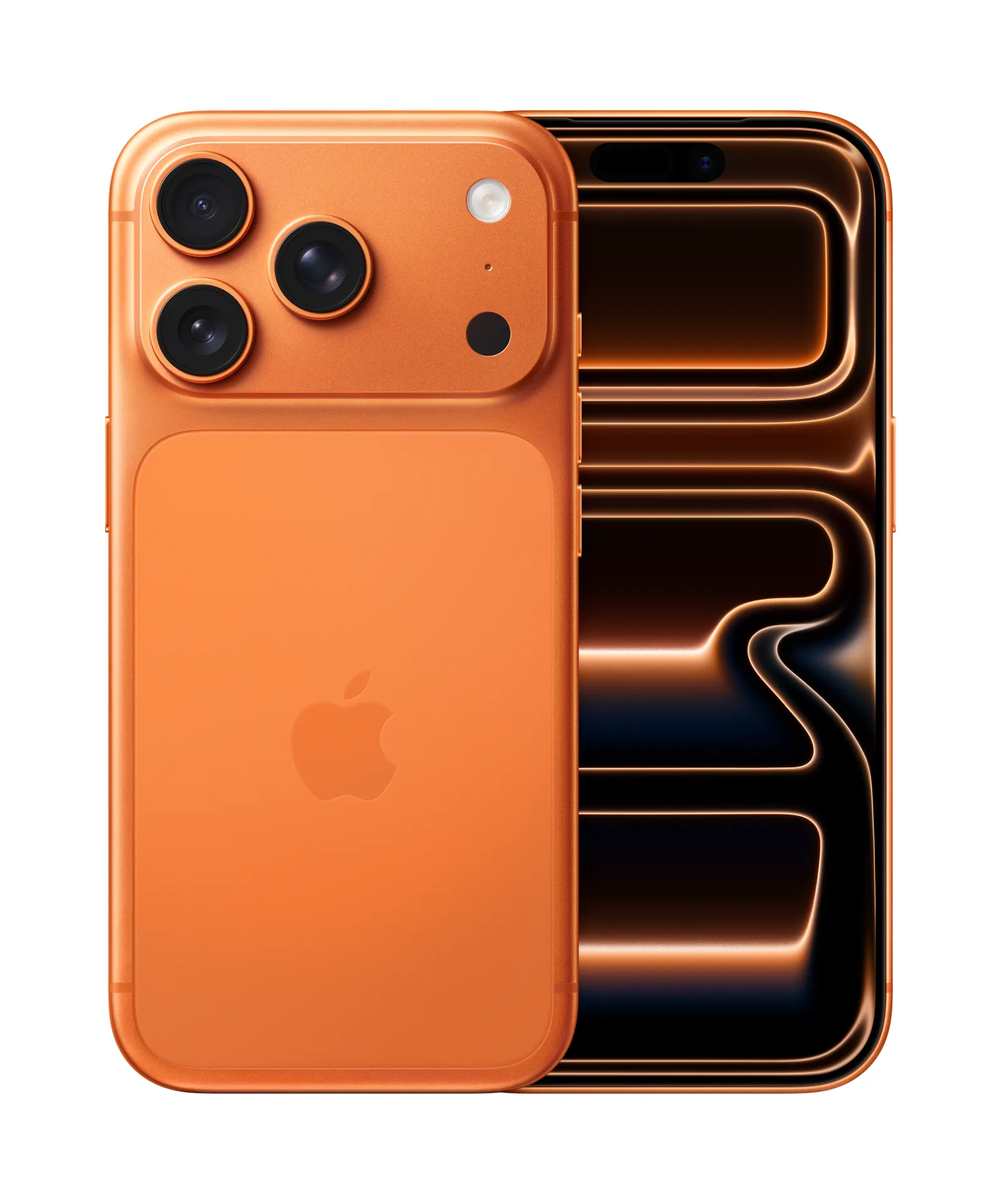
New iPhone Air Review: Slimmest and Lightest iPhone Ever

New iPhone Air Review
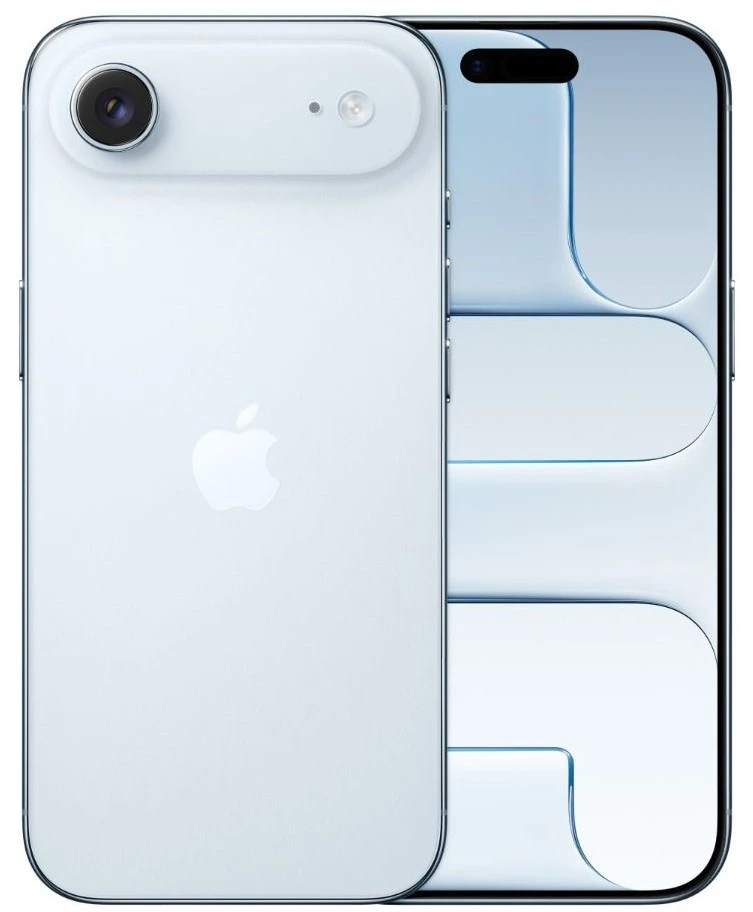
iPhone Air

“the iPhone Air is a deliberate attempt to attract a different kind of customer to the iPhone world. It’s for people who are willing to deal with a few missing features (like a versatile camera) in exchange for a one-of-a-kind device that no one else has”
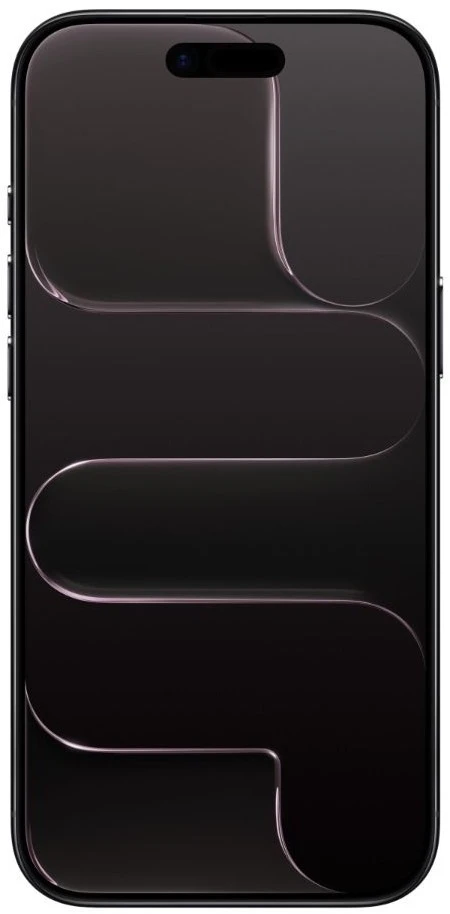
 

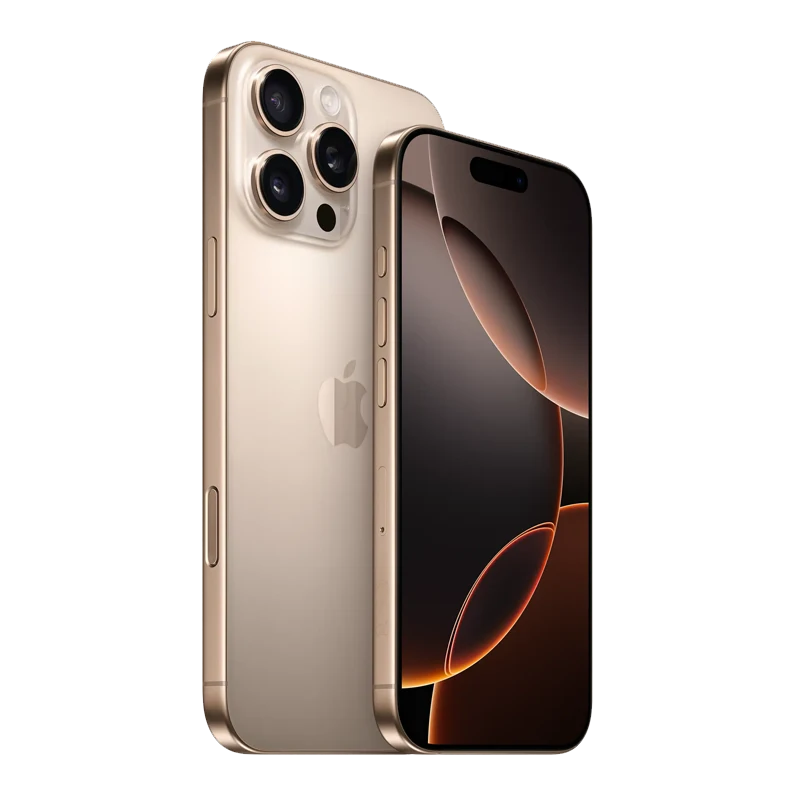
Say hello to the new iPhone Air. It’s the brand-new model that has everyone talking, and it’s Apple’s answer to those who love a stunning, high-end phone but crave a super-slim, easy-to-handle design. From its powerful A19 Pro chip, and gorgeous ProMotion display to its ultra-slim body and stylish titanium frame, the Air is definitely turning heads. But with a smaller battery and a single rear camera, did Apple cut too many corners to achieve this breakthrough design? We spent some quality time with this unique iPhone to find out if it’s really the “future” everyone’s been waiting for, or if it’s just a stylish compromise.


Overview

The new Apple iPhone Air is finally here, and it’s a huge deal. Apple even skipped the “17” in the name to mark the occasion. After the ‘Mini’ and ‘Plus’ models didn’t quite hit the mark, Apple is trying something new to make its flagship phones appeal to more people. Can the Air—a model that puts design front and center—be the one? The iPhone Air is priced like the old Plus but it’s a totally different beast. It’s got more in common with the Pro phones, boasting a high-end ‘Pro-motion’ display and the powerful A19 Pro chipset, plus a titanium frame. It even looks a little sleeker than the current Pro duo. 

However, it cuts corners in a couple of places. Firstly, the camera setup is more basic (similar to the iPhone 16e); and secondly, the battery is the smallest in the whole iPhone family. Clearly, this phone is meant for a specific crowd. The iPhone Air also offers a 6.5-inch screen—a new size that sits right between the 17 Pro and 17 Pro Max. This gives you one more option for screen size. But the real star of the show is how unbelievably thin and light it is. In fact, it’s a mere 5.6 mm thin, and it weighs just 165g. That makes it a tiny bit thinner and only two grams heavier than Samsung’s super-slim S25 Edge competitor.

The phone only has a single rear camera, which is a disappointment for photo enthusiasts, but Apple thinks it’ll be fine for people who don’t demand much from their phone’s camera. On the flip side, the 18 MP selfie camera has a cool, new sensor, which might actually be a bigger deal to some users. Finally, there’s the battery. With just 3,149 mAh, it’s a bit worrying, even though Apple usually works its optimization magic to make even small batteries last. But enough talk. Let’s crack open the box and see if the iPhone Air is truly as good from as the hype and if Apple’s really on to a winner here.


Specs – iPhone Air

  • Display: 6.50-inch Super Retina XDR OLED | 120Hz ProMotion | HDR10 | Dolby Vision | 1260 x 2736 pixels screen resolution | Anti-reflective coating
  • Chipset: Apple A19 Pro | Apple GPU (5-core graphics)
  • Memory: 12GB RAM
  • Storage: 256GB / 512GB / 1TB 
  • OS: iOS 26
  • Rear camera: 48 MP (wide) | video capture up to 4K at 60fps | Dolby Vision HDR
  • Front camera: 18 MP (wide) multi-aspect | video capture up to 4K at 60fps
  • Battery: 3149mAh | supports Wired, wireless MagSafe/Qi2 and reverse wireless
  • Connectivity: 5G | eSIM | Wi-Fi 7 | Bluetooth 6.0
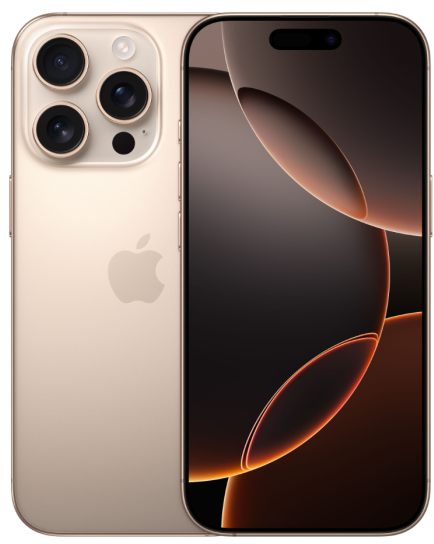
  • Misc.: Colors: Space Black, Cloud White, Light Gold, Sky Blue | weighs 165 g / 5.82 oz


What’s to Like

1. Slim and lightweight design

The whole “slim phone comeback” actually started the second we heard rumors about Apple working on a 5.6mm phone that weighs just 165 grams. Samsung technically beat them to the punch with the Galaxy S25 Edge (which is two grams lighter). But the Air is still the one that feels thinner in your hand. Why? Probably because of its slightly curved edges, which make it super comfortable, while the S25 Edge is more blocky. Plus, the Air’s screen is smaller, which makes the whole phone feel more compact.

Apple really pushed their engineers to make this phone so thin while keeping it tough. The frame is made of high-quality recycled grade 5 titanium (even the Pro models didn’t get this). It also comes with the new Ceramic Shield Gen 2 on the front, which is pretty impressive engineering.

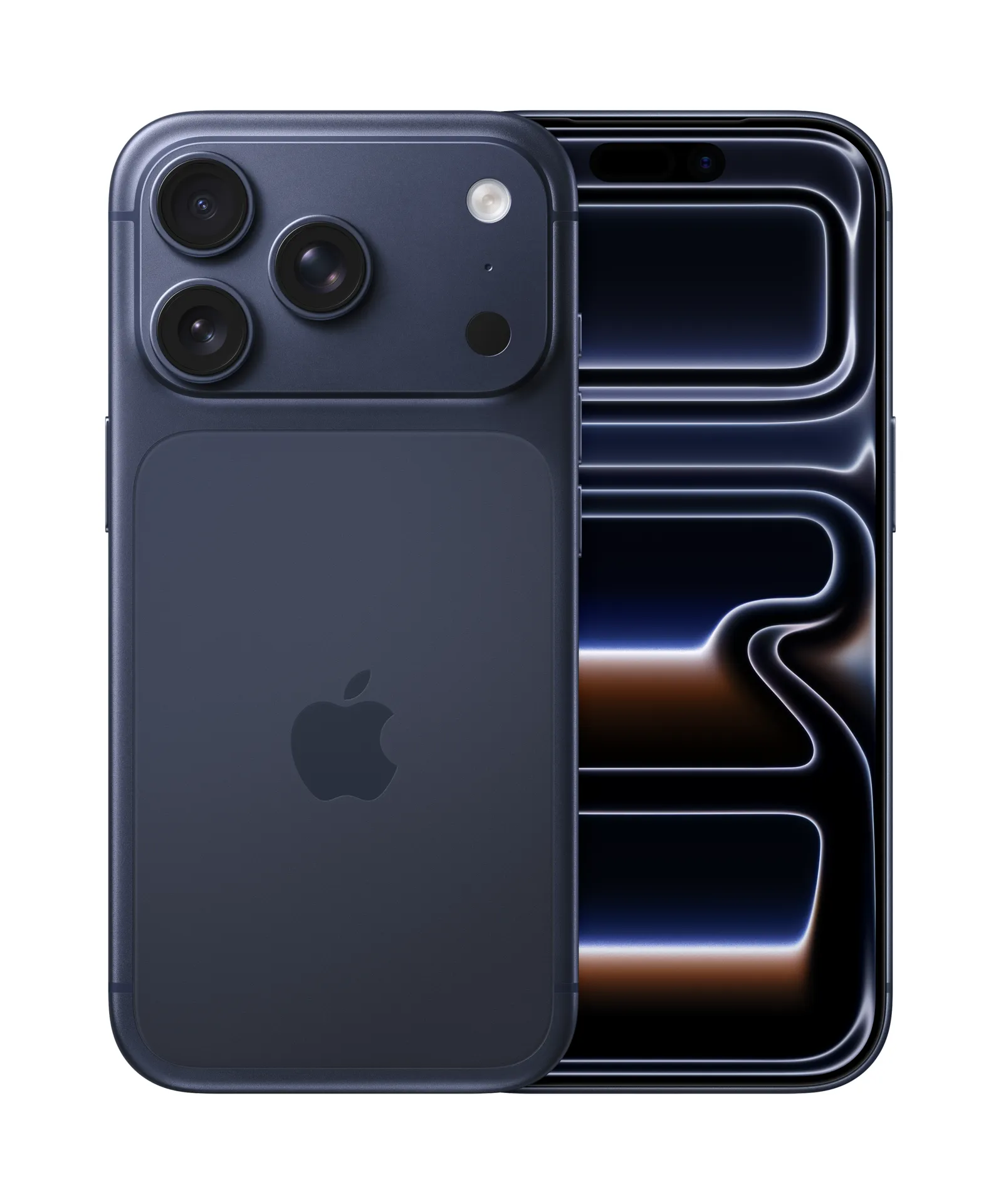
Now for the weird part: actually holding the Air is a little puzzling. We couldn’t quite figure it out, but the finish on the side frame feels a bit… cheap, almost plastic-like. And those tiny little gaps where the side frame meets the glass? They just don’t belong on a phone that’s supposed to be a design masterpiece. Oh, and that glossy bit on the camera bump? It looks and feels totally out of place.

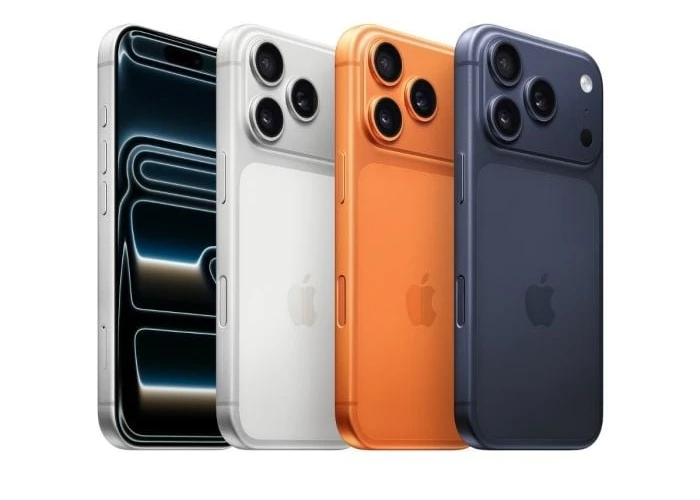
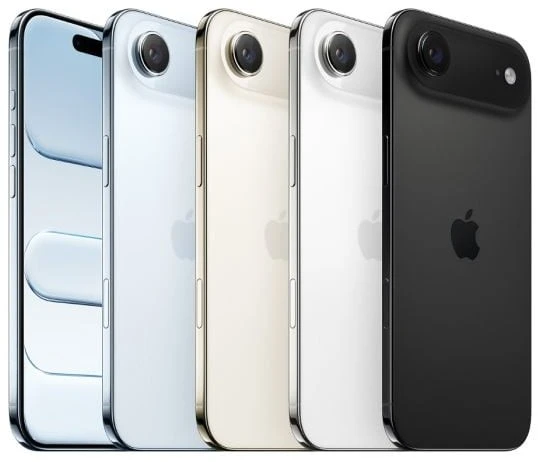
But, it’s not all bad! The frosted back glass feels amazing, and the Sky Blue color we tested looks really sharp and doesn’t pick up smudges easily. You can also grab it in Light Gold, Cloud White, and Space Black.

Overall, the engineering is seriously cool, and it is the thinnest iPhone ever (if you ignore that camera bump). But the actual design decisions are a bit hit-or-miss. The materials are great, but the final assembly and feel don’t scream “premium” the way you’d expect from Apple. Still, if you’re looking for a lightweight flagship phone right now, there aren’t many other options out there, and that alone might make the Air a winner.


2. Impressive display

So the first thing to know about the display of the new iPhone Air is that it’s a beauty. It clocks in at 6.5 inches and uses that fancy Super Retina XDR OLED tech. Basically, it has the same excellent quality display as the high-end 17 Pro and 17 Pro Max models—it just sits perfectly in between them in terms of physical size. It also has ProMotion, which is Apple’s cool name for the variable 120Hz refresh rate. This is what makes scrolling and animations look super smooth, but it also saves battery when you’re just reading static text.

The screen resolution is nice and sharp at 1260 x 2736 pixels, and you get all the color goodies like HDR10 and Dolby Vision support. The True Tone feature is there too, of course, to make sure the colors always look natural based on your environment. Apple actually toned down the overall brightness numbers a bit this year, but don’t worry—in real life, the sunlight visibility is still amazing.

Here’s the quick brightness scoop:

  • Manual Mode: If you crank the brightness slider, it hits a strong 780 nits.
  • Auto Mode: If you let the phone decide,  it jumps up to nearly 998, which is really bright for a sunny day.

Now, about Apple’s crazy claim of nearly 3,000 nits? We managed to see that peak brightness, but it only happens for a very short moment, and only when a tiny part of the screen is lit up. So, technically, they’re right, but it’s not something you’ll experience constantly. The good news? The new anti-reflective coating is the real MVP here. It helps a ton with cutting glare, which is why the screen is so easy to see in bright light, even if the high brightness peaks only last a second or two.

It seems the display could run brighter for longer, but the system is programmed to dial it back, probably to keep things cool. Regardless, you’re getting an impressive display, with good brightness and tech that is set to provide you with top-tier viewing experience. 


3. Impressive performance… almost

The iPhone Air is run by the brand-new Apple A19 Pro processing chip, which is similar to the one included in the 17 Pro and the 17 Pro Max models. But this is where it gets confusing. As much as the chip is similar, it’s not really the same. 

Let’s break it down: Firstly, both the Air and the Pro/Pro Max versions have a 6-core CPU (the part that handles general tasks) and they run at the same speeds. So, for everyday things, they’re identical. And lastly, the key difference is the graphics. The powerful Pro/Pro Max models get a 6-core GPU, but the Air only gets a 5-core GPU. You’ll only notice this if you’re doing intense gaming or video editing, but it’s important to know the Air has a slightly  dialed-back graphics engine.

The rest of the top-range hardware specs include: 12GB of memory (RAM), which helps with multitasking; The storage base model starts at a generous 256GB, with model options from 512GB or 1TB, which will cost you extra; and the N1 networking chip for to improve connectivity. This is for things like Wi-Fi 7, Bluetooth 6.0, and the latest Ultra Wideband features for precise location tracking.

So how fast is it really? Well, compared to last years chip, the A19 Pro in the Air shows a 15% boost multi-core tasks. And for graphics, it was barely ahead of last year’s A18 Pro, and actually fell behind even the non-Pro iPhone 16 chip on another. Bottomline. The iPhone Air is super fast for launching apps and general use, but its GPU performance is lacking as it perform inconsistent for high-end gaming compared to the true Pro models.


4. Good overall camera system

The first thing you need to know is that the thin design meant Apple had to make a tough choice: only a single smaller camera lens on the back. The Main Camera is a 48 MP wide sensor, which is similar to the standard iPhone 17 model, but not the bigger, newer sensors from the Pro/Pro Max models. It’s a great camera, but it’s clearly a step down from the absolute best that Apple offers.

Next is the Front Camera, which is actually the more interesting piece of tech. It has a brand-new 18 MP sensor that’s shaped like an octagon (weird). It features Center Stage, which is great because it keeps you perfectly in the frame even if you move around during video calls. It also has Optical Image Stabilization (OIS), which is super rare for a front camera and means your selfies and videos will be much steadier. Plus, the shape of the sensor lets you easily take full 4:3 photos whether you hold the phone normally or sideways, without having to mess with the settings.

Here’s the classic Apple issue: the full camera settings are still a mess. Even with the new UI, if you want to change basic things like switching between the 12 MP and 24 MP resolution options, you can’t do it easily. You have to go deep into the main Settings app, then find the Camera menu, and then toggle an option just to enable some quick controls in the app. It’s a mix of intuitive new controls right on the screen and the old, disorganized settings being buried way out of sight.


5. Good battery life

So, on paper, the battery in the iPhone Air looks a little tiny—it’s only 3,149 mAh. That number might make you think you’ll be constantly hunting for a power source. But here’s the cool part: thanks to the super-efficient ProMotion screen and that slightly toned-down A19 Pro chip, this phone performs way better than its battery size suggests.

From tests done, the iPhone Air reached almost 13 hours of battery life on moderate use. Not as good as other top-range smartphones but it’s a great result. In fact, for things like streaming videos and gaming, it actually outlasts some of the top Android phones that have massive batteries, like 5,000 mAh and higher. That really shows how efficient Apple has made the whole system.

Now, we noticed the scores for regular calls and web browsing aren’t exactly mind-blowing, but honestly, this phone isn’t designed to be a marathon runner. Apple’s goal with the Air was simple: make sure you don’t have to charge it multiple times a day. And it definitely achieves that. In the end. Sure, you can find other iPhones that last longer, but the Air’s job isn’t to beat its siblings. It’s to offer that super-slim design without giving you battery anxiety. And it seems to pull that off.


6. Impressive Sustained Performance under Pressure

Considering how incredibly thin the iPhone Air is, Apple’s engineers actually did a decent job managing the heat from the powerful processing chip. Here’s the breakdown of what happens to the iPhone Air when it’s pushed to the limit (due to long gaming sessions or other intensive tasks):

The graphics (GPU) stays pretty stable, holding around 61% of its top speed without completely dropping off. The main processor (CPU) slows down a bit more, settling at 76% of its max speed. This is what we call “throttling,” and it’s basically the phone trying to prevent overheating. The good news is the actual body of the phone maintains a reasonable temperature. The only part that feels genuinely hot is the small area right around the camera bump, where the chip sits. Even the metal frame stayed cool to the touch.

Overall, the sustained performance and heat management is alright. It’s not the absolute best, but we have to remember that Apple made the slim design it’s top priority here. They managed to deliver a very slim phone that still gives you decent, sustained power without heating your hand.


7. New iOS 26

The new iOS 26 is probably one of the biggest changes Apple has made to its phone software in a long time. They’ve introduced this new look they call “Liquid Design,” and honestly, it really makes the whole operating system feel fresh and modern. It’s a nice visual update that was definitely needed. Beyond just the look, they packed in a ton of great new features across the board. We’re really happy to see things like:

  • Smarter Photos: The new Visual Intelligence makes things like recognizing text and objects in pictures even better
  • Goodbye Spam: The Call Screening feature is a huge win for cutting down on annoying spam calls
  • Gaming Boosts: They added improved Game services to make playing on your phone smoother
  • Personal Touch: The home and lock screens are now way more customizable, which is always fun
  • Better Camera App

Basically, it’s not just a new coat of paint—it feels like a complete refresh that makes the experience of using the iPhone Air really great.


What’s Not to Like


1. Slow charging

When it comes to charging speed, here’s the honest truth: the iPhone Air is a bit behind the timesApple says the phone hits its fastest speeds with a standard 20W Power Delivery (PD) charger. Crucially, that means it doesn’t support the fancy new 42W PD charger that the other new iPhone 17 smartphones are using. From using an 18W PD charger, even with a relatively small battery, it takes a while compared to the competition. Here’s what we found: In 30 minutes, the phone is close to 50% charged, and for 100% full charge it takes up to 90 minutes. 

To put that in perspective, that speed is similar to last year’s iPhone 16 Pro, but it’s noticeably slower than the rest of the new iPhone 17 family. You might find it frustrating since most competitors—even ones with bigger batteries—can charge up much faster. Overall, the iPhone Air charges slower than the other iPhone 17 phones in the series.  


2. Slower file transfers

The iPhone Air includes a slower USB-C 2.0 port, where as the Pro/Pro Max models get the super-fast USB-C 3.2 Gen 2 port, which can transfer up to 10Gbps. You’ll definitely notice the difference when you’re transferring large files to and from your computer—the Air will be significantly slower.


3. Buggy iOS

While the new “Liquid Design” definitely feels fresh, we’re not sure Apple totally nailed the landing. To be honest, it brings a sort of retro vibe that can look a bit messy in places, and some elements feel chaotic.

What used to be known for its clean, symmetrical look now feels like an animated jumble. Apple definitely needs to go back and polish a lot of these rough edges, especially rethinking where some buttons and elements are placed. The bigger disappointment is that iOS 26 is still missing some core features that Android has had for years.

  • File Management is a Nightmare: It’s still incredibly frustrating to manage your files, whether you’re doing it on the phone or connecting to a computer. This really hasn’t improved at all.
  • A Blast from the Past: I mean, the big new feature is that you can finally set an MP3 file as your ringtone (if it’s under 30 seconds). Seriously? That feels like something we should have been able to do back in 2015.
  • Falling Behind in AI: Apple is also clearly lagging in the AI race. They’re investing a lot, but we haven’t seen any meaningful, user-facing improvements yet.

The bottom line, if you’ve been using iOS for years and are used to its limitations, you probably won’t find much wrong with iOS 26. It’s a very stable operating system, but when it comes to modern features, it’s starting to feel pretty dated.


iPhone Air Alternatives


1. iPhone 17


If you’re looking at the two new iPhones, and the Air’s super-thin design isn’t your absolute priority, the standard iPhone 17 is simply the smarter, better-value choice for most people. While the Air is focused on being slim, the iPhone 17 delivers the essential features without compromise: it boasts a versatile dual-camera system with a much-needed 48 MP ultra-wide lens, a huge upgrade over the Air’s single rear camera.

Crucially, it offers significantly better stamina, clocking in with a superior 15 hours of active moderate use time compared to the Air’s 13 hour active use. With a longer battery life, a more capable camera, and a lower starting price, the iPhone 17 is clearly the practical winner that gives you more bang for your buck.


2. Pixel 10 Pro

While the iPhone Air’s design is impressive, the Google Pixel 10 Pro is the far superior alternative for anyone who prioritizes performance and versatility over extreme thinness. The Pixel completely dominates the photography segment with its triple camera system, which features a versatile 5x optical zoom periscope telephoto lens and a larger main sensor—a setup that easily outclasses the iPhone Air’s simpler dual-camera array.

Furthermore, the Pixel 10 Pro is designed for serious endurance, boasting a significantly larger 4870 mAh battery (compared to the Air’s 3149 mAh) and supporting faster 30W wired charging. This combination of a comprehensive camera suite and superior battery capacity, along with the added benefit of 16GB RAM options, makes the Pixel 10 Pro a much more robust and functional flagship than a device focused only on cutting-edge slimness.


3. S25 Edge

When considering a flagship alternative to the iPhone Air, the Samsung Galaxy S25 Edge provides a dramatically better overall package, especially in core hardware areas, and comes at a significantly lower price. The Galaxy S25 Edge features a superior display, offering a larger 6.7-inch OLED panel with a sharper 1440 x 3120 pixel screen resolution and higher peak brightness than the Air’s screen.

Furthermore, the camera system is vastly more capable. It includes a massive 200 MP wide sensor, alongside a dedicated 12 MP ultrawide lens, whereas the Air is limited to a single 48 MP camera. Finally, while both phones prioritize a slim build, the Galaxy S25 Edge offers a larger 3900 mAh battery (compared to the Air’s 3149 mAh) and supports faster 25W wired charging. All of these advantages come at a much lower starting price, making the Galaxy S25 Edge a clearly superior choice for consumers seeking high-end performance and features.


4. iPhone 16 Pro

If you are deciding between the ultra-slim iPhone Air and a more feature-rich but older model, iPhone 16 Pro is the superior alternative that justifies its “Pro” moniker by avoiding the compromises made for the Air’s thinness. The 16 Pro offers a vastly more powerful and versatile camera system, including a triple camera setup with a 5x optical zoom periscope telephoto lens, and a dedicated 48 MP ultra-wide lens.

These features entirely missing from the Air’s basic single-rear-camera approach. Beyond photography, the 16 Pro also delivers superior endurance with an average battery life of 14 hours (compared to the Air’s 12 hour) and features much faster USB Type-C connectivity for data transfer, making it the better choice for any power user.
 

Verdict

All in all, the iPhone Air tries to do things differently in an attempt to bring in new crowds under the iOS banner. The kind of people that will take a one-of-a-kind device even with significant drawbacks instead of heading to the arena of flagships fighting over a few extra pixels. There’s certainly no shortage of such customers, but it remains to be seen how many of them are willing to pay the premium price of the Air.

Here’s the thing that’s a little worrying: we thought the build quality felt kind of cheap, even though it uses premium materials. That’s a highly subjective feeling, though, so please don’t just take our word for it. If you feel the same way, that’s probably a deal-breaker for a phone that’s supposed to be all about design. Even if you pass on it, you have to admit the Air is an impressive achievement from an engineering perspective—with great performance and decent battery into a package this thin is amazing.

Ultimately, the iPhone Air is a deliberate attempt to attract a different kind of customer to the iPhone world. It’s for people who are willing to deal with a few missing features (like a versatile camera) in exchange for a one-of-a-kind device that no one else has. There are definitely people out there who value style over a few extra pixels, but let’s to wait and see if enough of them are willing to pay a premium price for it.

Thanks for checking out this review. Now it’s your turn. What are you impressions the new iPhone Air? Are you someone who usually prefers a thinner phone, or do you always go for the model with the biggest battery and best camera? If you have comments, I would appreciate it so much if you left them here below. And if you wanna purchase the new iPhone Air, then click HERE. That’s all from me. Stay safe. Until next time 😀

 

Apple iPhone 17 Pro Max Review: Bigger, Better iPhone

Apple iPhone 17 Pro Max

Apple iPhone 17 Pro Max

“the iPhone 17 Pro Max is definitely the most capable iPhone to date”


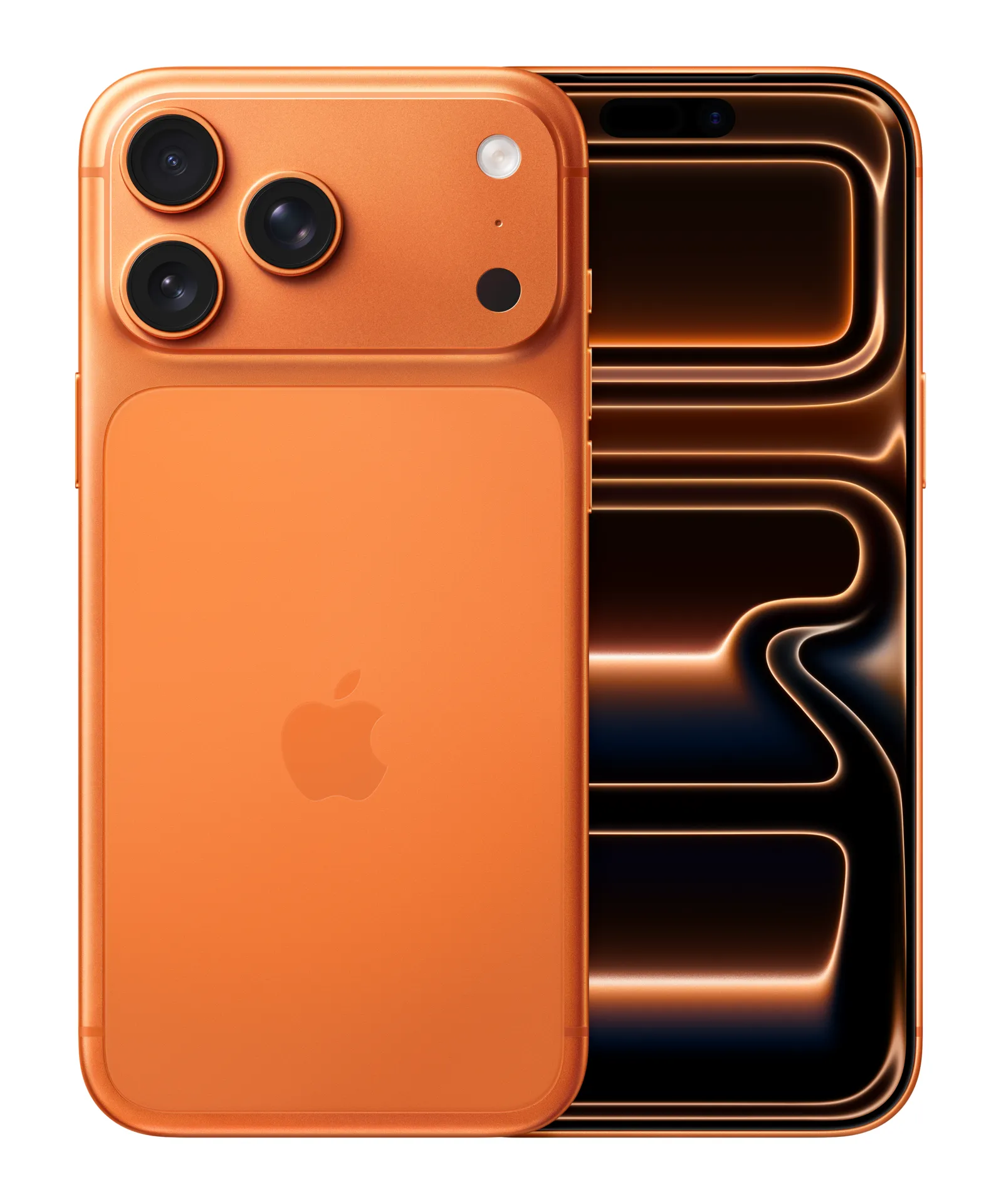
The iPhone 17 Pro Max is officially here, and yeah, it’s still enormous. This year, Apple decided to stop being subtle, giving us a bold aluminum frame and a massive camera ‘plateau’ that looks less like a camera bump and more like a tiny, high-tech landing pad. But don’t let the sheer size fool you; this tank of a phone is packed with an absurdly long-lasting battery (you might actually forget where your charger is) and a game-changing 4x optical zoom. To find out more, let’s check out the review of the new iPhone 17 Pro Max to see if it’s truly the king of the castle, or just the heaviest thing in your pocket.


Overview

It’s time for the new best iPhone ever, the Apple iPhone 17 Pro Max to take the platform. Apple finally decided to shake things up this year. They ditched the old ‘Plus’ model for the super-slim iPhone ‘Air’, and finally gave every new iPhone 17 phone a ProMotion screen. Like, it was about time, right?

The new Pro Max has a sleek, brand-new aluminum body, which helps keep the weight down and stops it from getting too hot while gaming or binge-watch. Internally, you get the latest Apple A19 Pro chip, faster charging, and a bigger battery. Storage-wise, the whole line-up starts at 256GB, and if you’re a media hoarder, the Pro Max now has a crazy 2TB option. This thing is also the perfect home for the new iOS 26 with that cool Liquid Glass interface.

The camera also got an upgrade, too. You’re getting a brand-new 18MP selfie camera with Center Stage and a new 48MP telephoto lens with 4x optical zoom. And for the video nerds, you can now shoot up to 4K video with Dolby Vision. Oh, and the new signature color is a vibrant Cosmic Orange. The one thing that didn’t change is the Dynamic Island—looks like we’ll have to wait a little longer for a smaller notch! Overall, it’s a huge update that really changes the game, for better or worse!


Apple iPhone 17 Pro Max – Specs

  • Display: 6.9-inch, Super Retina XDR OLED, 120Hz ‘Promotion’ (1320 x 2868p)
  • Processor: Apple A19 Pro, Apple GPU 6-core
  • Memory: 12GB RAM
  • Storage: 256GB / 512GB / 1TB / 2TB
  • Operating system: iOS 26 
  • Battery: 4832 mAh (Nano SIM) / 5088 mAh (eSIM); supports 20W wired charging, 25W wireless and 4.5W reverse wireless
  • Main camera: 48MP wide; 48MP ultra-wide; 48MP telephoto (periscope) with 4x optical zoom; up to 4K video capture at 120 fps
  • Selfie camera: 18MP wide, up to 4K video capture at 60 fps 
  • Other: weighs 233g; 3 colors including Cosmic, Silver, and Deep Blue; IP68 water and dust resistant; USB-C 2.0  


What’s to Like

1. Large impressive display

So, the new iPhone 17 Pro Max’s display is huge— like 6.9-inches huge. But to be honestly, it’s pretty similar to last year’s model— same sharp screen resolution and even the same pill-shaped camera cutout. But here’s the cool part: they upgraded the protection with a stronger glass called Ceramic Shield Glass 2. It also has a new anti-reflective coating, which basically means it’s much easier to see outside in bright sunlight. You’ll definitely notice the difference. 

The screen uses that ProMotion tech, which is just Apple’s fancy way of saying the refresh rate is super smooth (like up to 120Hz smooth), but it can drop all the way down to 1Hz to save battery when you’re just looking at a static picture or using the “always-on” mode. In terms of brightness, it has plenty. It gets incredibly bright when you’re outdoors (up to 3,000 nits in peak moments) and can also get super dim at low light, which is great for your eyes.

And with media, Apple’s claims that it’s an excellent, bright display that handles content like HDR movies (Dolby Vision) flawlessly. Oh, and one final thing: the vibration feedback (the “haptics”) when you tap or press things is still fantastic. 

So in the end, you get a large display, with smooth scrolling, better glass protection, and good brightness in any situation.     


2. Impressive battery life with fast charging

They gave the battery a tiny little boost in size—not a massive jump from last year, but hey, we’ll take it. If you get the physical SIM card slot version, the battery’s slightly smaller than the eSIM-only model, but the difference isn’t that much. The important thing is, this phone’s battery lasts pretty well. On average use you get up to 18 hours of battery life, which is actually amazing. So, you’re not going to worry about hunting for a power outlet halfway through the day.

Apple is finally trying to speed things up. They’re now using a charging standard that lets the phone charge much faster. Apple has a new 40W charger that they claim will charge the phone to 50% in 20 minutes, and a full charge from almost dead to 100% took us just 1 hour and 12 minutes. If you get a different charger it won’t be as fast but at least it will charge. The good news is, we found that a bunch of other third-party, high-powered chargers could hit these same fast speeds, too. You don’t necessarily have to buy the Apple-branded one.

Wireless charging is included, and it also gotten faster, too. If you use a MagSafe or a new Qi2 charger, you can get the phone to 50% charge in just 30 minutes. The 17 Pro Max includes smart settings to keep the battery healthy for longer. It can learn when you usually unplug and stop charging at 100% until just before that time. Plus, you can manually set it to stop charging at 80% to preserve the battery lifespan, and you can always check your battery health in the settings.

So you get the iPhone 17 Pro Max with a full day’s battery life, that chargers faster, either using wired or wireless charging. It also comes with settings you can control to help keep the battery going. 


3. Impressive performance

So what’s under the hood? This new iPhone 17 Pro Max comes with the newest, faster performance chip called the A19 Pro. Same chipset in the iPhone 17 Pro. Think of it as the super-smart engine that makes everything run. Performance is noticeably better than last year’s model. In simple terms, things load 10% faster and when you’re doing a lot at once, it’s about 20% faster overall. If you’re upgrading from a two-year-old phone, you’ll feel a huge difference. The graphics part of the chip is a step up, especially with something called Ray Tracing, which makes shadows and reflections in games look way more realistic.

Apple finally added a special cooling system (a vapor chamber) inside. This means when you’re pushing the phone really hard for a long time (like a huge gaming session), it won’t overheat and slow down. They say this makes performance 40% better under stress.

There’s even more things to know. Firstly, you get a nice memory increase of 12 GB of RAM (that’s the short-term memory that keeps your apps running smoothly), which is a welcome increase. Next is the base storage, which is now a larger 256 GB. No more worry about storage space. And if you need a ton more room, the Pro Max even has an exclusive 2 TB option. Lastly, the bottom USB-C port is super quick, meaning transferring big files (like 4K videos) to your PC or external hard drive happens way faster than before.

Basically, the iPhone 17 Pro Max is an impressive performer. It comes with Apple’s top-of-the-line fast processor, with more memory, more storage, and faster speed transfer. It’s really know for its speed and can handle anything you throw at it.  


4. Camera upgrades

Let’s talk about the cameras on the new iPhone 17 Pro Max. Apple usually doesn’t change much year-to-year, but this time, they made some improvements, namely: the telephoto (zoom) lens and the front (selfie) camera. 

The telephoto camera gets a higher-resolution sensor at 48 MP instead of 12 MP from last year’s model. The zoom feature is a little less—with now at 4x optical zoom now, down from 5x, however, by sacrificing a tiny bit of reach, the new sensor takes much better, cleaner photos when you use the 4x zoom and even the digital zoom. The quality is simply higher.

The selfie camera comes with a completely new, high-res sensor (which is 18 MP) that’s designed to take full advantage of the space in the cutout. It’s “smart” and can take photos in different sizes (like 4:3 or 1:1 square) without losing its wide field of view, which is pretty clever.

The primary wide and the ultrawide cameras have the same hardware as last year, yet there’s no need for an upgrade as they already had impressive camera sensors great. Now, all three rear cameras can take super detailed 24-megapixel photos, which used to be only for the Main lens. All the rear cameras can also shoot at full 48-megapixel resolution if you want the absolute highest detail.

Overall, the camera upgrades has improved it seems like a solid upgrade that brings better clarity and resolution across the board. 


5. Includes new iOS

The iPhone 17 Pro Max is running Apple iOS 26 right out of the box. Yes, they totally skipped a bunch of numbers to match the year and unify their whole operating system lineup, which is actually a pretty smart move for simplicity. But the real star of the show is the software itself. The biggest, most beautiful upgrade is something called Liquid Glass—this is Apple’s gorgeous new design language, and it’s a total game-changer. Clearly inspired by visionOS, Apple says it makes digital things feel “natural and alive.” And honestly, it does look stunning. Think crystal-clear, liquid-like elements all over the UI with an incredibly dynamic and responsive feel when you interact with the screen.

Plus, the customization options are awesome. You can play around with new fonts, animations, and colors to really make the phone your own. Best of all, they didn’t forget the details—tons of core apps like Photos, Messages, Safari, Maps, and even features like Apple Intelligence and CarPlay got a fresh new look and cool updates! It’s a massive software refresh that makes the entire experience feel brand new and super advanced.


What’s Not to Like

1. Controversial Design

Apple has officially brought back the aluminum frame. They totally dumped the super-tough titanium and steel from the Pro models this time. It really feels like Apple took a major step back here, which feels a lot less premium, less fancy, less exclusive. That’s a shame.

That’s not all. The whole back design changed dramatically, and it’s causing some drama. You’ve got this enormous, rectangular camera section, the aluminum, and then a separate glass piece just for wireless charging. Honestly, all that mixing and matching of parts makes the design look messy, not like the smooth, seamless Apple products we’re used to. To make matters worse, you can actually see little, uneven gaps where the glass meets the metal. Not a good look. 

Now with the soft aluminum frame and the giant camera bump creates a huge headache for durability, because scratches and dents are practically guaranteed. One unlucky drop could easily bend the frame, totally messing up your water resistance. If you risk carrying the 17 Pro Max without a case, that huge camera area is going to look scuffed up super fast. Since this aluminum is way softer than the titanium or steel we had before, you absolutely must case up if you want to keep your phone looking nice.


2. Improved Telephoto Camera not such a great upgrade

Alright, let’s talk about that new telephoto camera. Honestly, after all the hype, it’s a bit of a letdown. We expected more. The 24MP zoom shots are fine, but they’re certainly not what you’d call razor-sharp. If you drop down to the 12MP version of the 4x shots, they might look a tiny bit sharper up close, but the detail still feels artificial, not organic. And don’t even bother with the 48MP mode. Those images are soft and kind of grainy, meaning it’s only worth it if you plan to spend ages fixing them up yourself later.

The new camera doesn’t even look better than the old iPhone 16 Pro. The 17 Pro Max’s 24MP photos look softer when you compare them closely. And if you switch to the 12MP mode? They’re just as good as the 16 Pro’s, not actually better. That’s a major bummer. When you zoom in on people at 4x, the situation doesn’t magically improve. You still get that overdone facial smoothing and highlight fixing, which gives skin tones that extra warm, slightly fake glow. And even the 8x zoom shots are just “alright”—nothing to write home about. In fact, the iPhone 16 Pro might actually produce slightly sharper 8x photos (even if they have a little more grain). So far? No real advantage coming from this “new” telephoto.


3. Limited availability and charger not included

 The “special” 40W charger for the iPhone 17 Pro Max is promising a lot according to Apple. It says that the new charger promises to charge the Pro Max to 50% in 20 minutes. That’s all well and good, but the problem is that the “special” charger is not bundled with the iPhone on purchase. You’re gonna need to buy it separately. And the other thing is that, This new charger is only available in the US. For the rest of us, we’re gonna have to find a good 40W charger, hoping that it will match the charging speed as advertised. 


iPhone 17 Pro Max Alternatives

The new iPhone 17 Pro Max is probably one of the most expensive smartphones in 2025. So if you can’t afford it, I don’t blame you. But don’t give up yet. If you want a cheaper premium option, let’s take a look at some great alternatives to the iPhone 17 Pro Max. 


1. Apple iPhone 16 Pro Max

If you’re eyeing the shiny new iPhone 17 Pro Max but your budget is not on your side, the iPhone 16 Pro Max is an absolutely fantastic alternative. You’re still getting a powerful phone in your pocket with the Apple A18 Pro chip, which is lightning-fast and handles everything you throw at it. While the 17 Pro Max brings small updates, the 16 Pro Max actually holds a few surprising wins, like an incredibly bright screen that performed exceptionally well outdoors. Plus, it gives you a bit more reach with a 5x optical zoom on its telephoto camera, which some photographers might even prefer. Simply put, for a significantly lower price, you get an experience that is virtually identical for most daily tasks, making the 16 Pro Max a top-tier option that saves you some serious cash without sacrificing flagship performance.


2. Apple iPhone 17 Pro

Deciding between the iPhone 17 Pro Max and the standard iPhone 17 Pro is all about size, not performance! If you’re looking to save some cash and want something easier to handle, the iPhone 17 Pro is the perfect alternative. You don’t have to compromise on the essentials because both phones are powered by the incredibly fast Apple A19 Pro chip and feature the exact same cutting-edge camera system, including the awesome 48 MP main and 4x optical zoom telephoto lenses. What you’re trading for the lower price and lighter, more pocketable design (it’s significantly smaller and 27g lighter) is mainly the extra screen real estate and the Pro Max’s superior battery life. If you can live with a slightly smaller display and charging a bit sooner, the 17 Pro gives you the full flagship experience without the ‘Max’ price or bulk. 


3. Samsung Galaxy S25 Ultra

If you’re looking for a phone that packs in more features for a much better price, the Samsung Galaxy S25 Ultra is a fantastic alternative to the iPhone 17 Pro Max. Why? The S25 Ultra completely dominates the spec sheet with a ridiculously powerful camera system, boasting a massive 200 MP main sensor and a versatile dual-telephoto lens setup, offering better photographic flexibility than the iPhone’s single zoom. Beyond the superior camera hardware, the S25 Ultra gives you a slightly sharper, brighter display and includes the iconic S Pen Stylus right out of the box—an invaluable tool for productivity and creativity that the iPhone can’t match. Essentially, for power users and those who love maximum features and Android customization, the S25 Ultra is the more feature-rich, powerhouse champion, often coming in at a much more appealing price than the iPhone. 


4. Google Pixel 10 Pro XL

If you’re looking for a phone experience that’s less about the closed-off ecosystem and more about pure Google smarts, the Google Pixel 10 Pro XL is a fantastic alternative to the iPhone 17 Pro Max. Why switch teams? Well, the Pixel 10 Pro XL really shines with its massive 5200 mAh battery and a super-bright display, peaking at an eye-searing 3300 nits, making it much easier to see outdoors than the iPhone. Plus, the Pixel comes standard with an impressive 16GB of RAM and runs the latest, pure Android OS, which means you get Google’s exclusive, industry-leading AI camera features right out of the box—like Best Take and Zoom Enhance—making it a perfect choice for those who prioritize computational photography and Google integration over raw performance. And let’s not forget the price tag: the Pixel usually offers all this cutting-edge tech for a significantly lower price. 


Verdict

You know how the new iPhone 17 Pro Max is supposed to be the best? Well, there’s a lot to like but also a lot not to like. For instance. First off, they made a risky move by switching the body to aluminum. Sure, it keeps the weight down and helps with the phone’s performance overtime, but it makes the phone way more prone to scratches. The mix of materials and those new colors on the back apparently don’t look as sharp as previous models either. It’s just… less lovable.

And the screen? Yeah, it’s amazing and now has a cool anti-glare finish, but the camera cutout (Dynamic Island) is still exactly the same, which is a bit disappointing. We’ve seen this great screen before. We definitely need to give props for the better battery life and faster charging speeds, even if the new charger needed to make it happen has a ridiculous name and protocol.

The camera updates for selfies and zoom photography are nice, no doubt. But here’s the kicker: the upgrade isn’t the giant leap Apple wanted us to believe. Even with all that Apple processing power, the photos are still only “very good to great,” and frankly, some of those Chinese ‘Ultra’ phones are already ahead of the curve in 2025. However, where the 17 Pro Max is absolutely unbeatable is video. Seriously, no matter which lens you use or what conditions you’re shooting in, this iPhone crushes it. Apple’s camera app is also genius for making pro features easy for mainstream users.

Overall, the iPhone 17 Pro Max is definitely the most capable iPhone to date, but it’s shaping up to be one of the less popular ones. Between the questionable new design direction and the fact that iOS 26 is still a little buggy and unpolished (especially that ‘Liquid Glass’ interface), many people will buy it, but maybe not as many will be genuinely hyped. It feels like the improved battery and the new zoom camera have the tough job of carrying this expensive phone all on their own. Hopefully, Apple quickly irons out those software wrinkles soon.

So what’s your take on this new iPhone 17 Pro Max? Is it the ideal smartphone you’ve been looking for? Which one of the features do you like or dislike? And what about the alternatives listed, are you more likely to consider them if the 17 Pro Max doesn’t meet your expectations? If you have anything to say or have to add, you are more than welcome to please add them below. And if you wish to buy it, then click HERE to see you options. That’s all from me. Take care. Until next time 😀  


Apple iPhone 17 Pro Review: The Best Improved But…

iPhone 17 Pro

Apple iPhone 17 Pro

“The iPhone 17 Pro is full of contradictions: you get something new, but it comes with a but. Things are improved, but maybe not as much as they should be.”


If you’re hanging on to your older iPhone 16 Pro, good for you. But after reading this review, you might thing twice. Yep. The new iPhone 17 Pro is here and it looks better than last year’s model. There are other impressive improvements too, but I’m not going to spoil it for you. Beside, it’s just better for you see them for yourself. So, without wasting any time, let’s check out the review of the Apple iPhone 17 Pro, and see if it’s worth ditching for the new or keeping the older model.


Overview

When last did you see the iPhone Pro look this good, this fresh, this unique? For me, it has been a while. Well, it looks like this year Apple is doing something different to the new iPhone 17 Pro. No more titanium frame. Now it’s the aluminum frame design.  It’s not just a facelift, this new model genuinely looks exciting and the upgrade may actually be worth it. Besides the cool new aluminum look, Apple’s added a bunch of other goodies to the iPhone 17 Pro. Firstly, they’ve thrown in a vapor cooling system to help get rid of heat generated from the processing chip. This should keep the brand-new Apple 19 Pro chipset running smoothly, especially when it’s powering the slick new Liquid Glass interface and animations in iOS 26. 

Next is the camera. The selfie camera is not an 18MP square sensor (kind of) with a wide lens that lets you snap landscape selfies even while holding the phone straight up. Then the telephoto camera has also been improved, too. It’s now 4x optical zoom with a much bigger 48MP sensor, which means better zoom quality. Thirdly, get ready for a better day-to-day experience because the battery capacity has seen a significant jump—the biggest increase for iPhone this year. This is even true for the models that still have a physical Nano SIM slot or the eSIM model, which is the only version that gets a bigger battery. Plus, there’s a new charging standard. 

But hey, it’s Apple, so some things are sticking around. You’ll still see that pill-shaped front camera cutout—no change there. And yeah, it looks like we’re still waiting for a fingerprint reader to make a comeback. Overall, though, the iPhone 17 Pro seems like a major step forward that brings a lot of genuinely useful improvements. What do you think about the aluminum body returning?


Apple iPhone 17 Pro – Specs

  • Display: 6.3-inch, Super Retina XDR OLED, 120Hz ‘Promotion’, (1206 x 2622p)
  • Processor: Apple A19 Pro, Apple GPU 6-core
  • Memory: 12GB RAM
  • Storage: 256GB / 512GB / 1TB
  • Operating system: iOS 26 
  • Battery: 3988 mAh (Nano SIM) / 4252 mAh (eSIM); supports 20W wired charging, 25W wireless and 4.5W reverse wireless
  • Main camera: 48MP wide; 48MP ultra-wide; 48MP telephoto (periscope) with 4x optical zoom; up to 4K video capture at 120 fps
  • Selfie camera: 18MP wide, up to 4K video capture at 60 fps 
  • Other: weighs 206g; 3 colors including Cosmic, Silver, and Deep Blue; IP68 water and dust resistant; USB-C 2.0  


What’s to Like


1. Excellent Performance

Let’s look at the performance of the iPhone 17 Pro. Under the hood, the Pro is rocking the new Apple A19 Pro chip. Think of it as the better A19 chip version. It’s faster than the standard A19 in the regular iPhone 17 and even slightly more capable than the A19 Pro in the iPhone Air. This specific A19 Pro packs a punch with a 6-core CPU, which is super-fast performance and helps to save battery-power, and a 6-core GPU. Plus, a 16-core Neural Engine makes those “Apple Intelligence” features fly. Apple has finally addressed the heat issue. They’ve given the 17 Pro a new vapor chamber and a different aluminum frame body (ditching the older Titanium). This will improve the cooling of the phone significantly, that is said to delivers 40% better performance when you’re gaming or really pushing the phone for a long time.

And then there’s the improved memory of 12GB of RAM which will make your iPhone less likely to freeze. Then there’s the storage capacity starting from 256GB up to 1TB. And now there’s this new N1 networking chip, bringing Wi-Fi 7, Bluetooth 6.0, and a blazing-fast USB-C 3.2 Gen 2 port.

Long story short: it’s seriously fast. Compared to the previous 16 Pro, you’ll see about a 14% to 20% performance boost in performance. If you’re upgrading from an older iPhone 15 Pro, the difference is even more massive—like a massive 30-55% overall speed boost. It’s truly a beast, keeping pace with the top Android phones even in intense tests like ray-tracing graphics. Overall, excellent performance. 

2. Impressive OLED Display

Next, let’s dive into the iPhone 17 Pro’s screen. Did I mention that it’s seriously impressive. When you open the box, you’re looking at a sharp, vibrant 6.3-inch Super Retina XDR OLED display. It still features ProMotion, which is Apple’s way of saying it has a super-smooth variable refresh rate (up to 120Hz) that drops all the way down to 1Hz when you’re just looking at a static screen or using the Always-On mode. This keeps everything feeling fluid while saving battery.

The biggest physical upgrade is the new Ceramic Shield Glass 2. It’s not just tougher; it has a new anti-reflective coating that really helps with legibility outdoors. Speaking of outdoors, Apple claims this screen can hit an insane 3,000 nits peak brightness in bright sunlight. Now, the screen is smart. The phone manages that extreme brightness automatically, meaning it’s harder to manually force it to max brightness than on older models. But don’t worry—when the conditions call for it (like standing under the noon sun), it pumps up the nits beautifully, giving you excellent sunlight visibility.

To top it off, you get premium features like HDR10 and Dolby Vision support, and Apple’s famous Taptic Engine ensures the physical feedback (haptics) feels responsive and satisfying. This is a gorgeous screen that focuses on being perfectly readable no matter where you are.


3. Excellent battery life with Fast Charging

Let’s talk about the one thing everyone actually cares about: the battery life. The good news is, all the phones in the entire iPhone 17 series all got bigger batteries, but the iPhone 17 Pro is the most impressive. The battery size is noticeably bigger—about 12% larger than the iPhone 16 Pro. It does stop there. If you’re getting the eSIM-only model, that battery is even 20% bigger than the old model.

That’s a huge, welcome change. The bigger battery delivered a significant boost, especially when you’re doing things like watching videos and gaming. While web browsing and call time stayed about the same, the overall usage is way up.

Fast charging is insane. If you can get yourself a 35W charger, you can charge your iPhone 17 Pro up to 70% in half an hour, and to full charge will take you  just over an hour. The bottom line? The iPhone 17 Pro lasts an insane crushes it with an average  Active Use Score of 15 hours and 23 minutes! That puts it way ahead of rivals like the Pixel 10 Pro and the Galaxy S25. You can finally relax a bit more about finding an outlet!


4. High-quality Photos & Videos

The iPhone 17 Pro got a pretty significant camera upgrade overall this year, with major improvements to hardware on both the rear and the front cameras. Let’s start with the telephoto camera. First, it’s been upgraded to a 48 MP camera, with a lower 4x optical zoom, which is actually better for taking portrait-style shots and mid-range photos.

Secondly, all three rear cameras shoot in high quality instead of only the main camera, with the main and ultra-wide camera still having the same 48 MP camera, and all the cameras uses image stabilization to keep your shots steady.        

Next is the selfie camera. It’s been boosted to 18 MP from 12 MP. It can also take photos in both portrait and landscape without losing any of the scene on the side. You don’t even have to rotate your phone to get a wider group shot. 

Next is the video quality. No changes here. It still captures impressive quality videos with awesome contrast, bright colors, and great detail.  With videos you can capture up to 4K video quality using the rear cameras at 120 frames per second (fps) and with the front camera, video quality is similar at up to 4K video but at 60 fps. Once again video stabilization is available making walking shots look smooth.  

The only downside is that, at night, if there are bright lights, you still get those noticeable internal reflections (little light dots/streaks) from the lenses, especially when you zoom in. Overall, it’s a huge step up for both the zoom lens and the selfie camera, making the iPhone 17 Pro a video and photo powerhouse—just be ready to learn a few new tricks in the camera app.


5. Excellent Durability

So, Apple ditched the fancy-sounding titanium this year and went back to aluminum as the main frame for the new iPhone Pros. While aluminum might not sound as “posh,” it’s probably better overall, even if it might scratch a little easier than the older Pro models.

They call it an aluminum unibody, but since they needed to allow for wireless charging, there’s a glass panel in the back. Honestly, the way they cut the glass into the metal looks a little jarring and not as perfectly “seamless” as you usually expect from Apple—it almost feels like an afterthought!

Because aluminum is softer, your iPhone 17 Pro might pick up nicks and scratches more easily. While the tough finish will handle light stuff, that sharp edge around the camera seems especially prone to chipping. Basically, be careful which pocket you place your iPhone if you keep it with your keys and coins.

The display is protected by the latest Ceramic Shield 2, and now it even has an anti-reflective coating. This is a small, subtle change, but it makes the screen easier to read when you’re outside in bright sunlight.

The iPhone 17 Pro is the “smaller” of the two Pro models and it feels really good in your hand. Even though it’s kind of heavy for its size, the smooth, rounded aluminum edges make it comfortable to hold. It might have lost a little of that super-premium titanium feel, but it’s still a nice piece of hardware that’s tough too. With the familiar water resistance rating (IP68), it can survive being submerged in water for a good amount of time.

In the end, the iPhone 17 Pro has gone back to having the softer aluminum frame, however, it includes a tougher front glass display with anti-reflective coating. It’s still water resistant and feels good to hold on your hand.   


What’s Not to Like


1. Expensive

The new iPhone 17 Pro is the compact version of the Pro Max, which means it has all the Pro Max features but smaller. With that being said, it’s no surprise that it’s so expensive. But, if you don’t like the big brother, or can’t afford the Pro Max, then the Pro version will have to suffice as the better alternative. There are other alternatives, which we will explore them later.


2. Telephoto camera not that impressive

As much as the telephoto camera has been upgraded, it’s not really as impressive as the other two lenses. For starters, the pictures look good overall thanks to the detail and excellent color shots, but lacks the sharpness compared to other lenses.    


3. Heat issues from gaming

If you’re worried about this iPhone getting too hot or slowing down when you’re playing demanding games for a long time, here’s the good news: it handles the heat pretty well! The best part is how cool it stays on the outside. Even when pushing it hard for a long time, the hottest spot on the phone barely got above 45 degrees.

In simple terms? It won’t be scalding hot in your hand after a marathon gaming session. So, while the internal speed is similar to the last generation, the cooling seems to be doing a good job of keeping the phone comfortable.


iPhone 17 Pro Alternatives

1. Samsung Galaxy S25 Edge

The Samsung Galaxy S25 Edge is here to save the day (and your wallet!)  Compared to the iPhone 17 Pro, the S25 Edge is the clear winner if you love getting more bang for your buck, since it’s relatively more affordable. But the value doesn’t stop there.

You get a phone that is light weight (163g vs 206g) and comes with a 200 MP main camera—blowing the iPhone’s 48 MP out of the water. Let’s not forget. Its larger screen is brighter, and sharper (thanks to the higher pixel density). It’s the ultimate combination of high-end specs and a friendly price. 


2. Apple iPhone 16 Pro

If you’re eyeing these two phones, the iPhone 16 Pro actually looks like the surprisingly smart choice, and here’s why. First and foremost, your bank account will be much happier, as the iPhone 16 Pro is significantly cheaper—it’s hundreds of dollars less than the iPhone 17 Pro’s starting price. But it’s not just about saving cash; the 16 Pro actually wins in some key areas, too.

You get a much brighter screen (1764 nits vs. 1012 nits measured) which is great for seeing things on the phone outdoors. It also features a sturdier titanium frame, giving it a premium, durable feel that the 17 Pro’s aluminum alloy might lack. Plus, the loudspeaker sounds better with the iPhone 16 Pro. It really looks like a solid deal that gives you premium features without the latest premium price tag. 


3. Apple iPhone Air

If you’re looking for a delightful alternative to the bulky iPhone 17 Pro, let me introduce you to the charming Apple iPhone Air. The biggest win here is that the iPhone Air is much friendlier to budget consumers, thanks to the significantly lower price tag. But what really makes it shine is its body: the “Air” lives up to its name by being much lighter (165g vs. 206g) and incredibly thinner (5.6 mm vs. 8.8 mm), making it a true featherweight champion that feels amazing in your hand.

And despite the smaller size, you still get a larger display at 6.5 inches and a premium titanium frame, giving you that top-tier Apple look and feel without paying the “Pro” price. It’s the perfect pick for portability and value.


4. Xiaomi 15T Pro

You wanna know why the Xiaomi 15T Pro is the cool kid on the block compared to the iPhone 17 Pro? Get ready, because this Android powerhouse brings some serious heat. For starters, it packs a much bigger battery (a huge 5500 mAh vs. the iPhone’s max 4252 mAh) that translates to better endurance—it even scored over an hour more in active use tests.

When it runs low, no sweat: the Xiaomi 15T Pro offers blazingly fast 90W wired charging, getting you to 100% in a shocking 36 minutes, which absolutely crushes the iPhone’s slower speeds. On top of that, you get a bigger, faster display with a 6.83-inch screen and a smoother 144Hz refresh rate (compared to the iPhone’s 120Hz), a slightly better performance chip, and—get this—it still comes in at a significantly lower price! It’s the ultimate combination of speed, power, screen size, and value. 


Verdict

So what can I say about the iPhone 17 Pro? It’s definitely a mixture of big improvements, and things that are basically the same as last year’s model. With the design, it finally got a fresh new look—which was honestly overdue. The new design, with its aluminum frame, is noticeable and has some practical benefits, even if it’s not everyone’s favorite style.

The internal cooling seems to help manage the heat, which is good. That said, it’s not a miracle worker, and the performance still slows down a bit under heavy use. But hey, at least it’s faster overall. And battery charging speeds are quicker now, which is a welcome change.

The upgraded telephoto camera is all well and good, but not groundbreaking. And while the new selfie camera is also better, because you can take wider shots without having to rotate the iPhone, yet it’s solving a very minor problem. The upgraded zoom camera is also fine, but not a dramatic improvement. The new software looks fancier, but it’s really not any easier or more intuitive to use. It’s all flash and less substance on the user-friendly front.

The iPhone 17 Pro is full of contradictions: you get something new, but it comes with a but. Things are improved, but maybe not as much as they should be. It’s a gorgeous, premium phone that’s going to sell like crazy, but personally, it just doesn’t feel like a must-have upgrade this year.

So what do you think of the iPhone 17 Pro? Is it the iPhone you was expecting? What features do you think would be better for this iPhone 17 Pro? What do you think of these alternatives, are you more likely to get one of them? Let me know at the comments below. And if you feel the iPhone 17 Pro caters to all your needs, then it’s either you hit the red “BUY NOW” button on the top, or Click Here to find out more.  That’s all from me. Until next time, stay safe 😀


HP Omen Max Review: The Amazing 16-inch Gaming Tank

hp omen max review

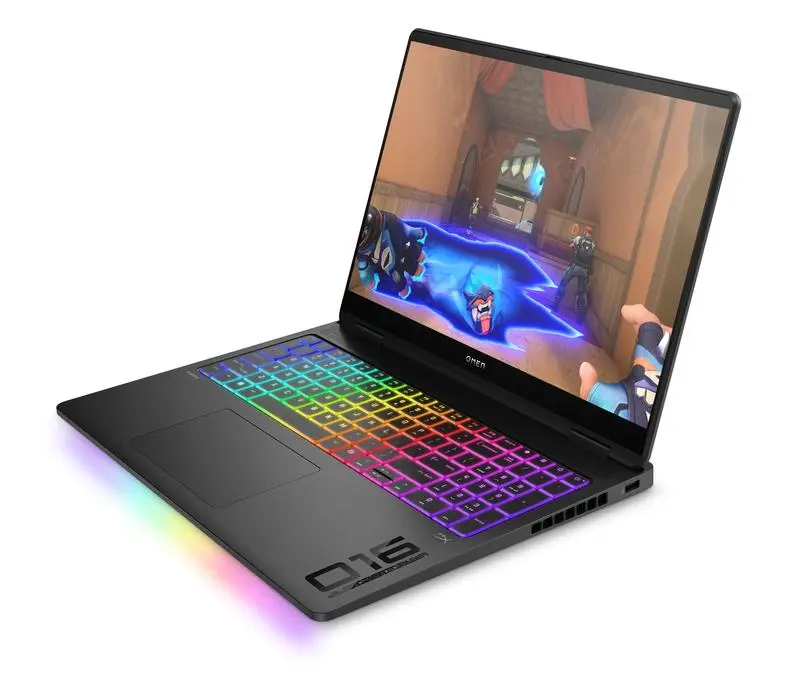
HP Omen Max

“The HP Omen Max is one of the best gaming laptops to get this year. It’s fun. It delivers an impressive gaming experience with a beautiful display. It’s full of impressive hardware specs and features as well. Just use it as a desktop gaming machine and you’ll be fine.”


If you’re planning to get yourself a gaming laptop and want the best gaming experience, then I have great news for you. You found it! The Omen Max from HP is here, and it’s been rated as one of the best gaming laptops this year. With that being said, is it really the gaming laptop you’re looking for? Let’s dive into the HP Omen Max review, and see what’s in store for you once you get your hands on this premium gaming laptop.  


Overview

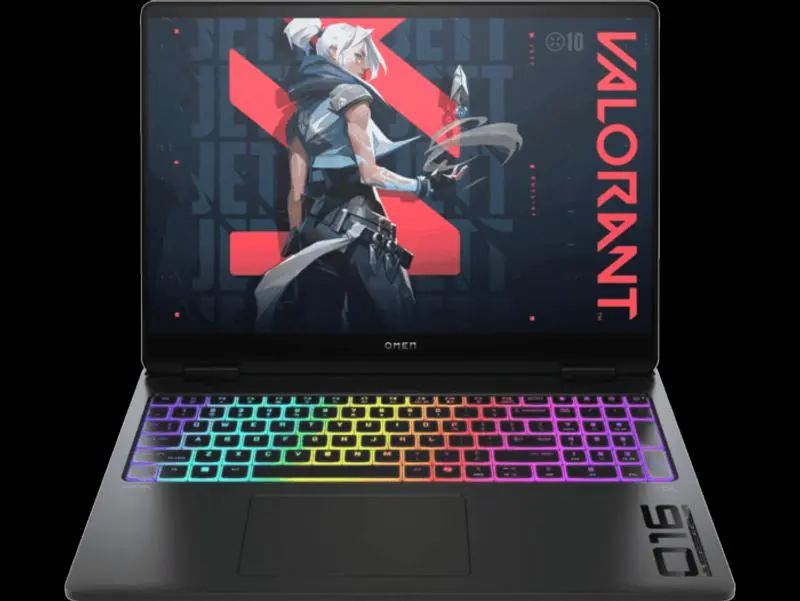
So what can you expect from the Omen Max from HP? Well, it is a gaming laptop so expect gaming in its most exquisite level. No joke. The Omen Max is one of the best gaming laptops that I got a hold of (and yes it was the entry model). Starting at $2500, you get a gaming machine with an RTX 50-series mobile GPU, and wow, this is an amazing gaming laptop.  

Honestly, this thing has pretty much everything you’d want in one of the best gaming laptops out there. The model used for the review was the Nvidia RTX 5070 GPU with 16GB of RAM. And get this, it absolutely crushed the most demanding AAA games out now, running them at high graphic settings and reach high refresh rates—especially with DLSS turned on. 

And get this: any game you play looks incredible on the vibrant 16-inch 165Hz display (I’m sure it would look even better on the top-range Omen Max that include an OLED 240Hz display). 

But it’s not just for gaming! That insane RTX 50-series power means you can tackle work without any hiccups, too. With the RGB keyboard with its thick keys, you have a comfortable gaming and typing experience. Plus, you’ve got a ton of ports to plug in all your essential gear like your favorite gaming mouse or keyboard.

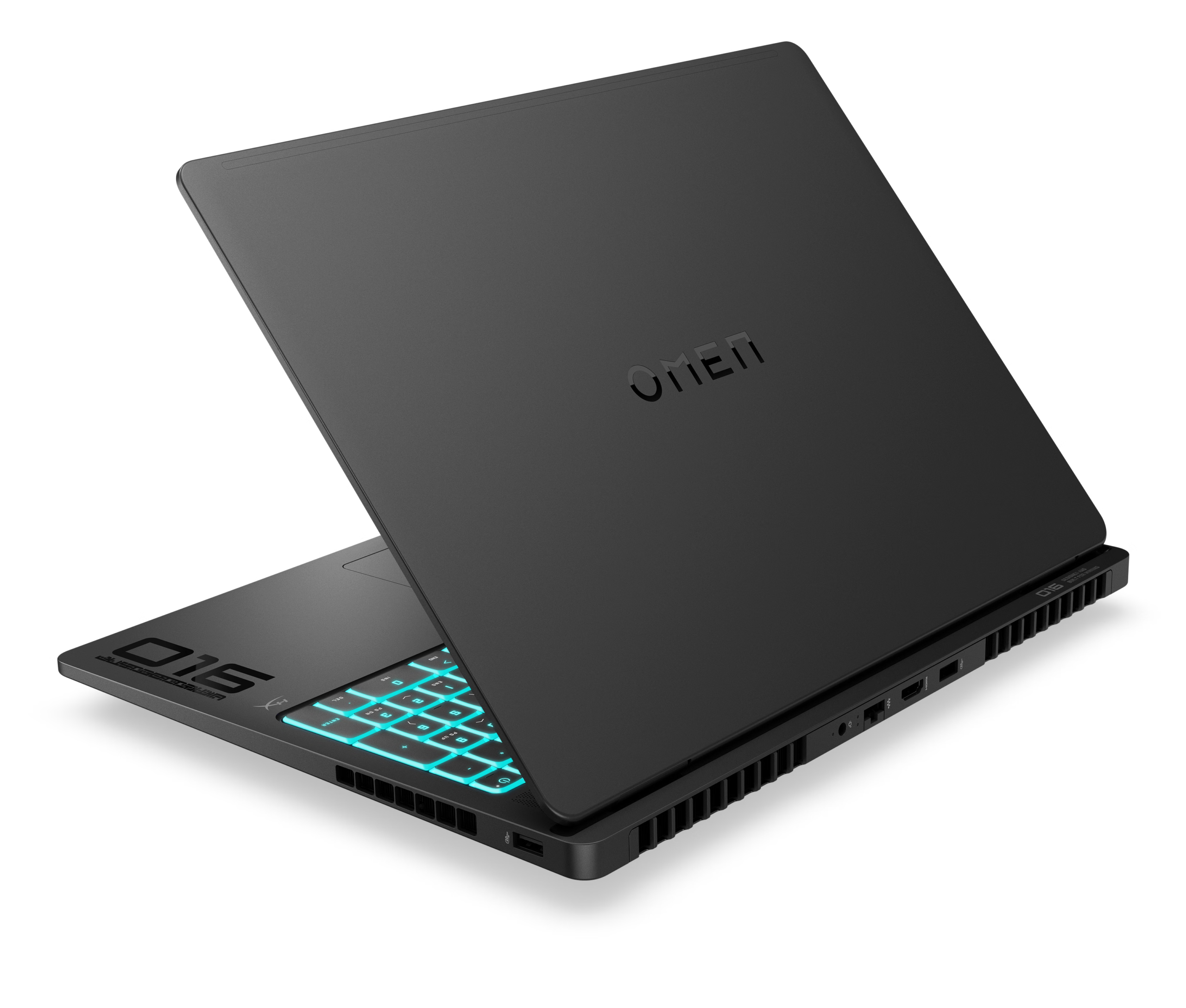
You’ll also like the sleek design. If you turn off the RGB lights, it’s so subtle that you’d never guess it’s a gaming beast, which is awesome if you want to keep a low profile when you’re out and about. But, I’m sure that’s something you won’t be doing with this one. Why do I say that? Well, this is one heavy laptop. 

I wish it were a little lighter and cheaper, but honestly, all the amazing stuff it does completely outweighs those minor drawbacks. After all that’s said, let’s check out the review and see all the details. 


Specs – HP Omen Max

  • Display: 16-inch, 165Hz, IPS, (1920 x 1200) / 240Hz, OLED, (2560 x 1600)
  • CPU: AMD Ryzen™ AI 7 / Intel® Core™ Ultra 7 / Ultra 9
  • Graphics: NVIDIA® GeForce RTX™ 5070 / 5070 Ti / 5090
  • Memory: 16 GB / 32 GB / 64 GB DDR5 RAM
  • Storage: 512 GB / 1 TB / 2 TB PCle Gen4 NVME SSD
  • OS: Windows 11 Home
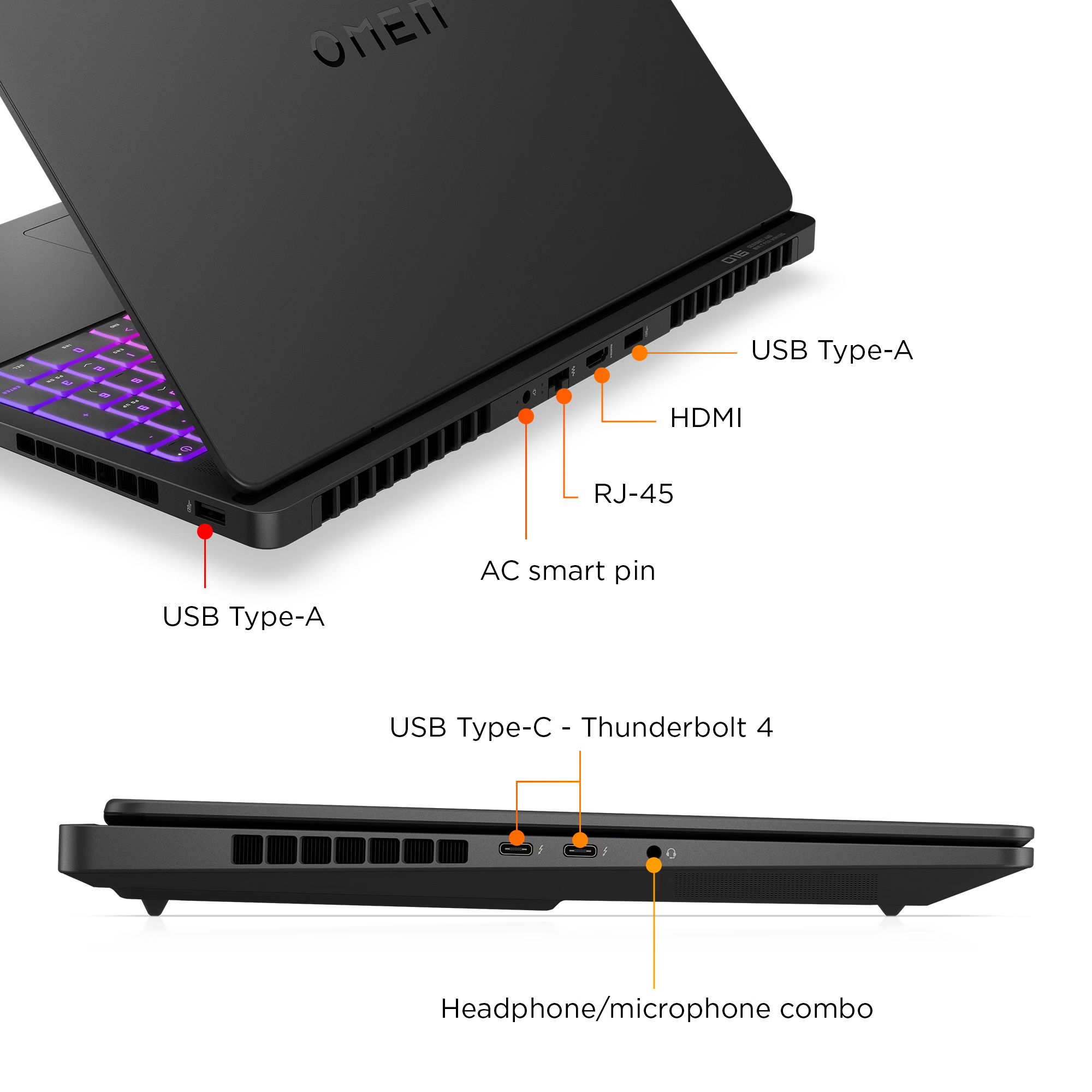
  • Ports: 2x USB Type-A; 1x AC smart pin; 1x HDMI 2.1; 1x headphone/microphone combo; 1x RJ-45; 2x USB Type-C (USB Power Delivery 3.1, DisplayPort™ 2.1, HP Sleep and Charge)
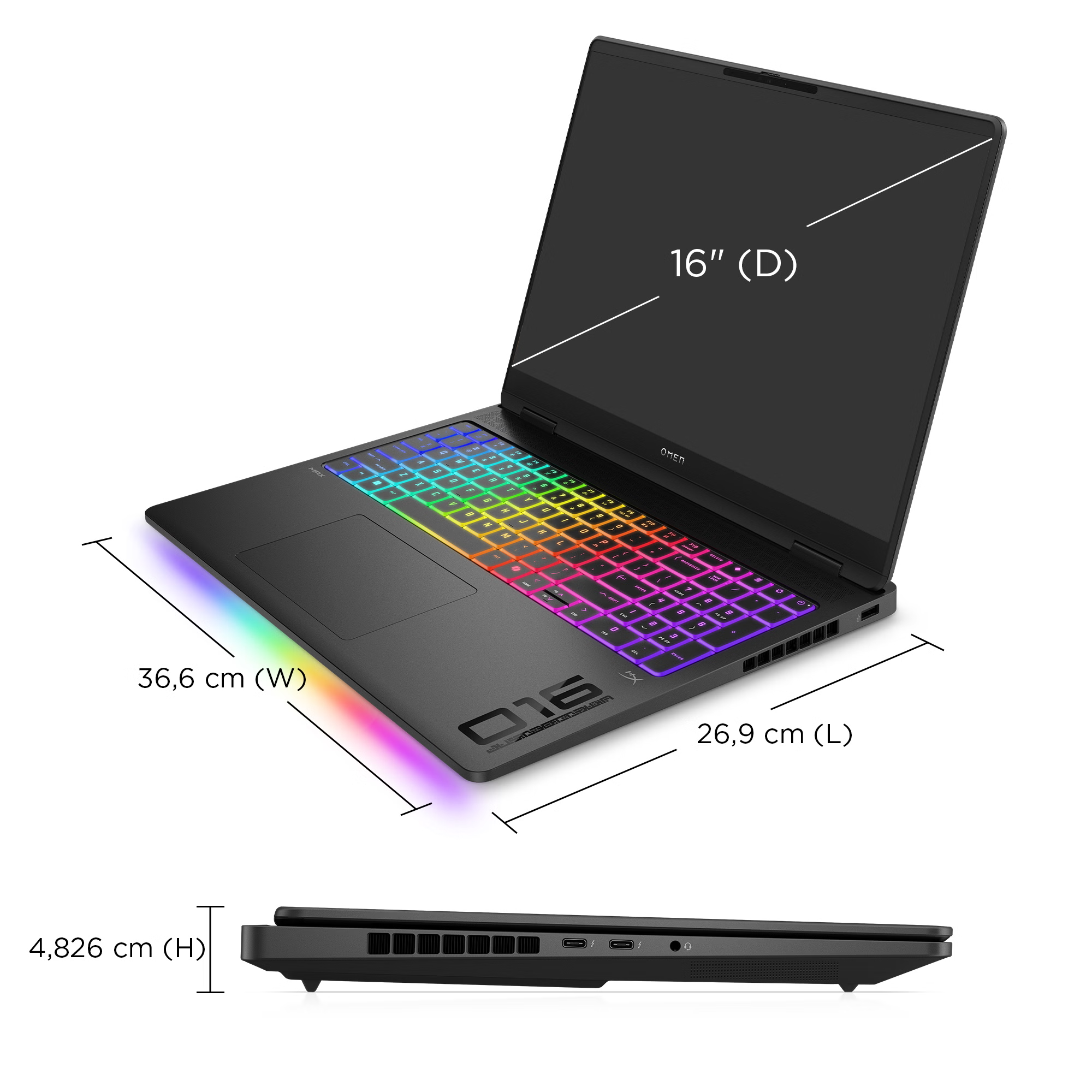
  • Weight: 5.9lbs (2.7kg)
  • Colors: Shadow Black; Ceramic White


What’s to Like


1. Excellent Performance

Alright, let’s jump right into the good stuff: the gaming performance. The performance is excellent. The entry model may be less expensive yet it still packs in the performance department. You’re looking at specs such as an RTX 5070 GPU, an Intel Core Ultra 7 CPU, and 16GB of RAM. I had an absolute blast running games on high or max graphic settings and still getting well over 60 frames per second, thanks also to the DLSS feature turn on.   

Games like Cyberpunk 2077 at 1440p with ray tracing, and with DLSS 4 enabled, can easily cruise between 65 and 70 FPS. Even The new Assassins Creed: Shadows game ran comfortably at a 60 fps (and that’s without the DLSS). It goes to show that the Omen Max is for serious players that want a seriously good gaming experience.    

The big takeaway from all this testing is pretty clear: DLSS 4 is an absolute game-changer for getting maximum performance. But even if you turn it off, you’re generally still going to get super smooth frame rates. In the end: This is one of the best gaming laptops you can get. All you need to ask yourself is: What game do I wanna play first?


2. Vibrant 16-inch Display

You know how sometimes games look amazing but run terribly, or vice versa? Well, this thing manages to make games look fantastic and run super smoothly, and that’s all thanks to the 16-inch IPS display (even better on a 16-inch OLED screen). Sure, going with OLED screen makes it more expensive, but honestly, your eyes will be so happy you won’t care. Seriously, it’s a jaw-dropper. 

Playing Cyberpunk 2077 was a joy. The screen looked amazing. The deep blacks and bright lights had an incredible pop. The colors are a bit on the vibrant side, which makes all those neon signs and holograms look super realistic and cool. But it’s not just for super-colorful games. Indiana Jones and the Great Circle, which has more natural colors, looked stunning too.

The colors are rich and vibrant. While they aren’t perfectly accurate compared to some other laptops, it’s really not a big deal. It gets bright enough, no problem, but if you put it next to something like a MacBook, those screens can get way brighter. For me, though, the brightness on the HP Omen is just bright enough to make things pop without making you squint.

Plus, games feel incredibly fluid because of the 165Hz refresh rate. And since the response time is super-fast, I didn’t notice any delays between when I hit a button and when the action happened on screen. That high refresh rate is a huge bonus, especially since some games are fast enough to almost match it. Overall, impressive display with bright and accurate colors, and a high refresh rate. 


3. Reliable Gaming Hub

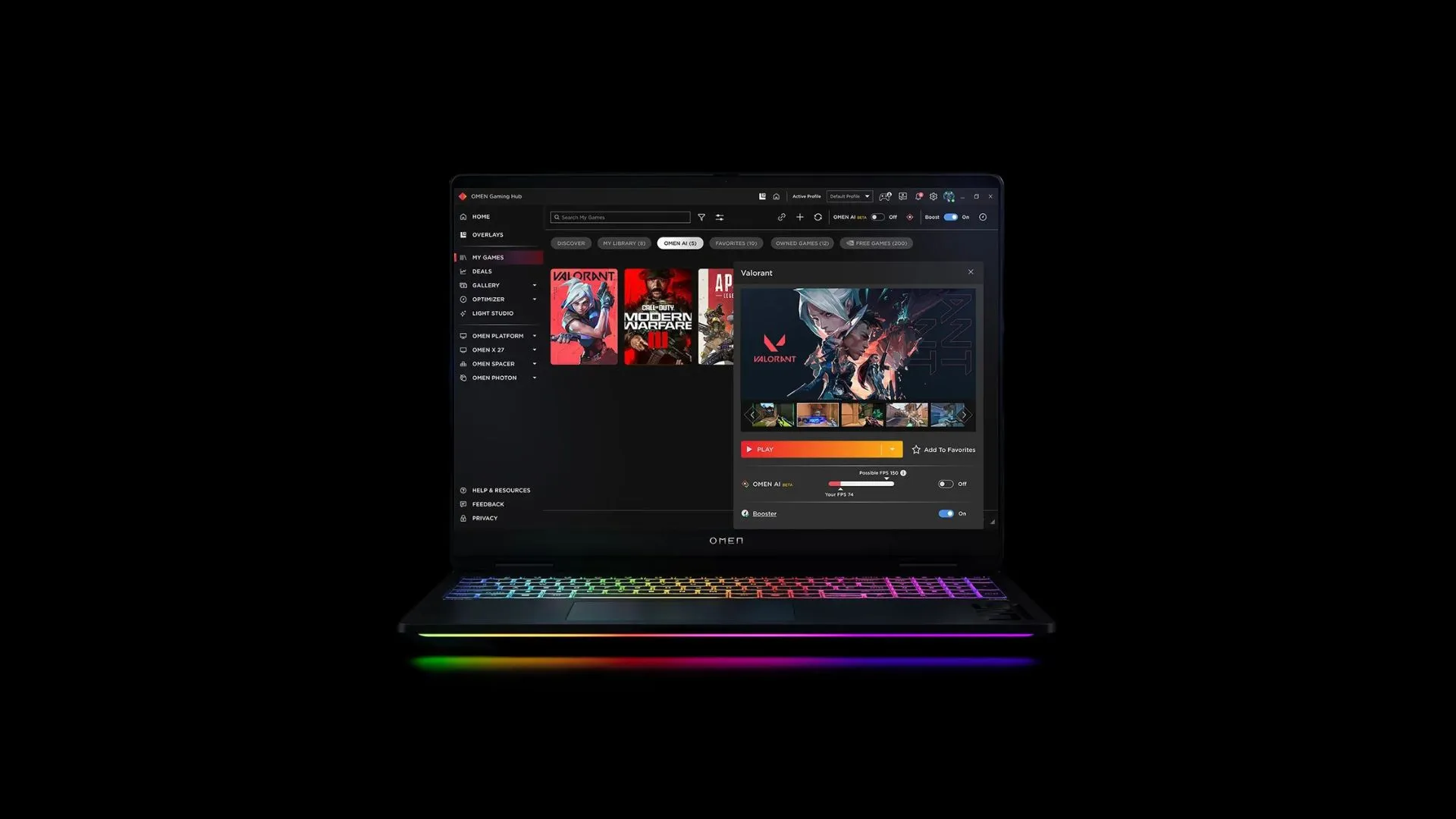
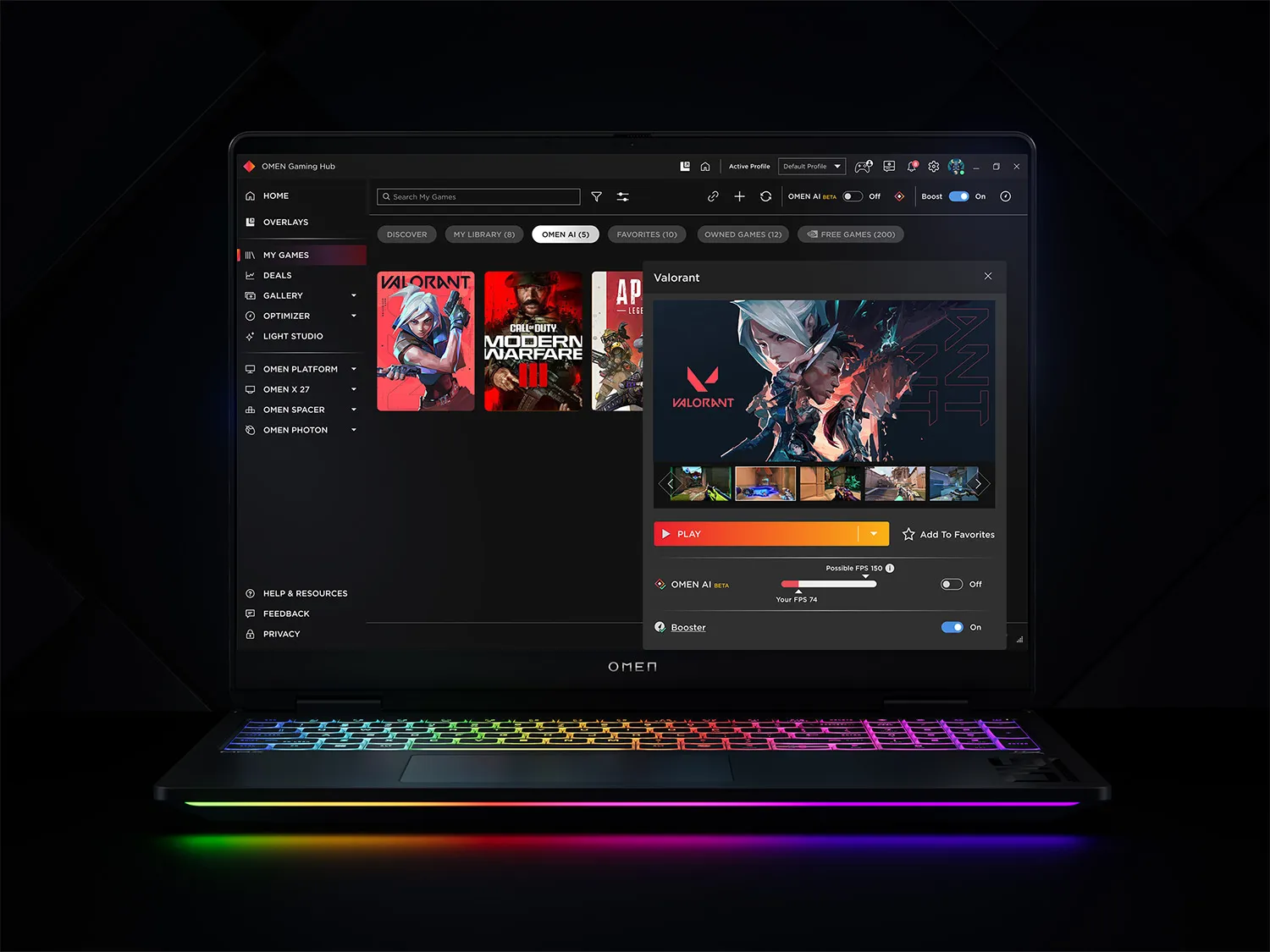
The Omen Gaming Hub is like your laptop’s command center. It lets you tweak and optimize performance (so your games run better), customize the cool RGB keyboard lighting, and keeps your whole game library organized. The best part? It’s super easy to use. The layout is intuitive, so you can quickly get everything set up exactly how you like it without digging through complicated menus.

Another great feature is that it can connect and control other Omen gear. If you have an Omen headset or monitor, you can manage their settings—like turning on or changing the monitor’s light effects—all from this one central spot.

Compared to a lot of other PC gaming launchers out there, the Omen Gaming Hub is a winner because it’s so user-friendly and gives you plenty of powerful customization options. It’s a useful piece of software.


4. Good Quiet Thermals

You know how most gaming laptops sound like a jet engine and feel hot enough to cook an egg when you’re really pushing them? Well, get this: the Omen Max 16 is surprisingly quiet and stays cool under pressure! It’s one of the best I’ve tested on both fronts. 

I won’t bore you with all the tech details about how they managed to keep it cool, but the important thing is you won’t feel like you have a loud, blazing-hot machine sitting on your desk. You’ll still hear the fans working—it’s a powerful gaming laptop after all—but they are way less noticeable than what we’re used to. Basically, it handles the heat and noise like a champ, which is a huge win for a powerful laptop! Anything else about it you’re curious about?


5. Sleek Design

Okay, let’s be real: at 16-inches and the weight of 6 lbs. (2.7kg), the HP Omen Max 16—is definitely a big, heavy machine. You’re not exactly going to be throwing this into a slim backpack and forgetting it’s there. Either than that, it’s undeniably a beautiful premium gaming laptop. 

The design is actually pretty low-key for a gaming laptop, which I like. It’s got this sleek, “Shadow Black” look with just a glossy Omen logo and some small text—not a bunch of flashy vents and aggressive angles. It’s built super solid, too. The aluminum top and bottom make it feel sturdy; you can’t easily bend or flex it, which is great. The lid is firm but opens and closes smoothly—I love that I can just use one thumb to pop it open.

Since I’ve got pretty big hands, I really appreciate the roomy keyboard deck. It gives you a ton of space to rest your wrists and move around. The keys themselves are nice. They are thick and bouncy, which is surprisingly good. Plus, it has a full number pad. You don’t see those often anymore, and it’s a nice bonus even if you don’t use it all the time. The touchpad is also large and very responsive.

Like I said, the look and design is subtle, so it doesn’t scream “GAMER” when you’re just using it normally. But if you want to spice things up, you can turn on the RGB lighting. When the colors are glowing and spilling over the keyboard, it looks absolutely stunning and reminds you that this machine can party.

Just a little warning, though: the lid picks up fingerprints and smudges way too easily. So if you want to keep that cool, pristine look, you’ll definitely want to keep a little cleaning cloth handy. Overall, it’s a big, beautiful beast that’s built like a tank. Does that sound like a trade-off you could live with?


What’s Not to Like


1. Poor Battery Life

Since the Omen Max 16 is a heavy-duty gaming rig, you already know the battery life isn’t going to be amazing. When we put it through the test, it tapped out in less than 90 minutes—just enough time for one focused match! Even when I was just browsing the web, it only lasted around three and a half hours. I personally threw on a game like Cyberpunk 2077, and the low-battery warning popped up after barely an hour. It handled YouTube better, but honestly, it was still draining faster than I was comfortable with.

The good news is, if you’re seriously gaming, you’ll need it plugged in anyway to get the best performance. But if you were planning on taking this machine to your favorite outdoor spot for gaming or to get some work done, you need to bring your charger. Seriously. Don’t forget it, or you’ll be looking for the nearest power outlet. 


2. Very Expensive

Okay, so here’s the lowdown: Games look absolutely stunning and run incredibly smooth on the Omen Max 16. It’s a killer experience, but prepare yourself for the price tag, because it’s steep. Seriously, this thing is not cheap.

It starts at a whopping $2,499 for the most basic model. And if you want the fully-specced one, you’re looking at paying a ridiculous $4,299. Bottom line: this is a premium experience, and you’re definitely paying a premium price.


3. Heavyweight

If you need weights to put into your backpack for your exercises, use the Omen Max instead. Why? Because this gaming laptop is a total tank. I know there are bigger, and heavier, gaming laptops out there, like the Razer Blade 18, but trust me, lugging this thing around is no fun.

Every time I travel with it, I feel it’s weight on my back. This thing weighs close to 3kgs (6 pounds), so moving around feels like a workout. In the end, this is a heavy gaming laptop. If you’re strong enough to handle it, that’s great. But others might feel it and will end up considering it as a gaming desktop. 


Omen Max Alternatives

If you don’t like the short battery life, the fact you have to carry a heavy gaming laptop, or the high price tag, then here’s a list of other alternative gaming laptops for you to consider.


 1. Alienware Area-51

Another impressive 16-inch gaming laptop

     FIND OUT MORE!

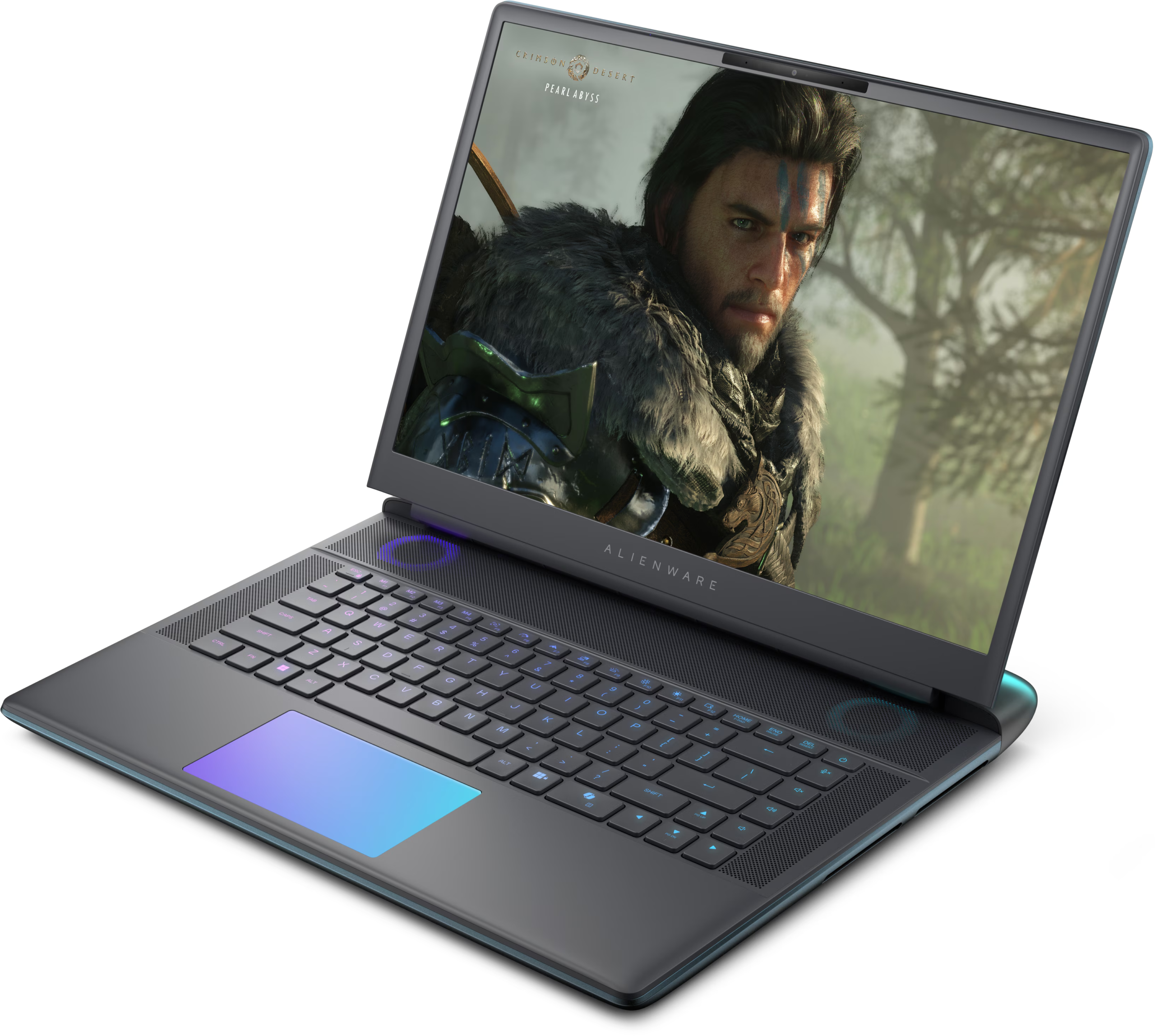
They’re both 16-inch laptops with gorgeous displays. They both have powerful hardware and delivers an impressive gaming experience. They’re both look flashy and well-designed. But are also expensive and heavy to hold. So why is Alienware’s Area 51 gaming laptop the better choice?

Well, firstly, it has more battery life than the Omen Max. With this one you’re looking at 4 hours on normal use and about 2 hours for just gaming on battery. It may not be groundbreaking, but the extra battery power may go a long way.

Secondly, another reason to consider it is because of the price. Whilst it’s also an expensive gaming laptop the starting price for the entry model is close to $2000 instead of about $2500 for the Omen Max. It’s a small difference but you’ll save some money.

So if you want a less expensive option, with a bit more battery life, than the Omen Max, check out the Area 51 gaming laptop from Alienware. 

2. Asus ROG Zephyrus G14 (2025)

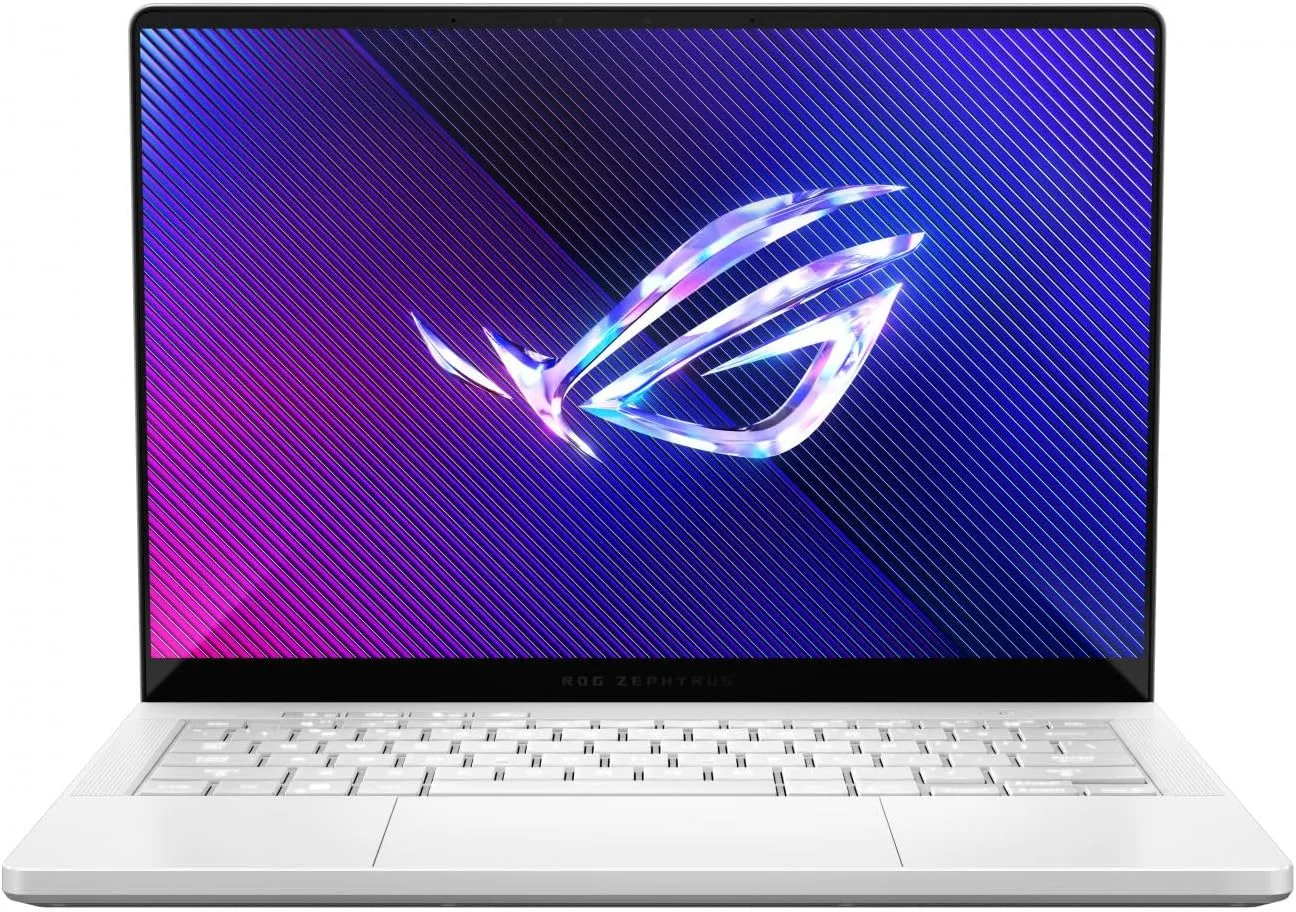
Lightweight 14-inch gaming laptop

FIND OUT MORE!

The G14 Zephyrus is a 14-inch gaming laptop that is well known for its solid build, plenty of input ports, excellent RGB keyboard, impressive OLED display, and of course, gaming performance. As much as the Omen Max has the same qualities, the only difference here is that the G14 is smaller and lightweight, which makes it better to carry around. With the G14 Zephyrus from Asus ROG, it weighs 1.5 kg (3.5 lbs.) compared to the Omen Max which weighs 2.7 kgs (6 lbs.).

The next thing is the battery life. Yes, it’s also a gaming laptop so expect the same similar short battery life here as well for gaming. The only difference is that you’re looking at up to 6 hours on normal use.

So, if you’re looking for a gaming laptop that you can carry around and game anywhere, then the G14 Zephyrus from Asus ROG is one to consider. Just remember to keep your charger with as you travel. 

Read Next


Verdict

The HP Omen Max is one of the best gaming laptops to get this year. It’s fun. It delivers an impressive gaming experience with a beautiful display. It’s full of impressive hardware specs and features. Just use it as a desktop gaming machine and you’ll be fine.

If price is a factor to you, look at the alternative gaming laptops here and see which one suits you. But if you’re looking for a great gaming experience, and can afford this one, then get ready for a ride of a lifetime only a few can experience.     

So what’s your take on this gaming laptop. Is it the gaming laptop you’re looking for? What features do you like most on gaming laptops? What of the alternatives, is there one that’s the apple of your eye? Let me here on the comments below.

And if you wanna find out more, or wanna buy it, then click on the red button on top. That’s all from me, folks. Check out some more gaming laptops, or any other tech goodies right here on wildbreaktech. Stay safe. Until next time 😀
 

How to Choose a Gaming Laptop: Ultimate Guide (2025)

how to choose a gaming laptop

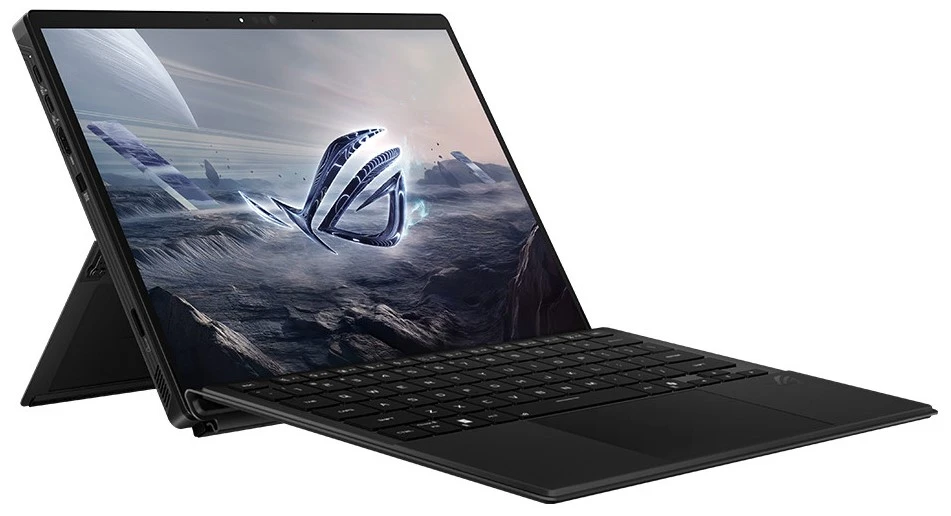
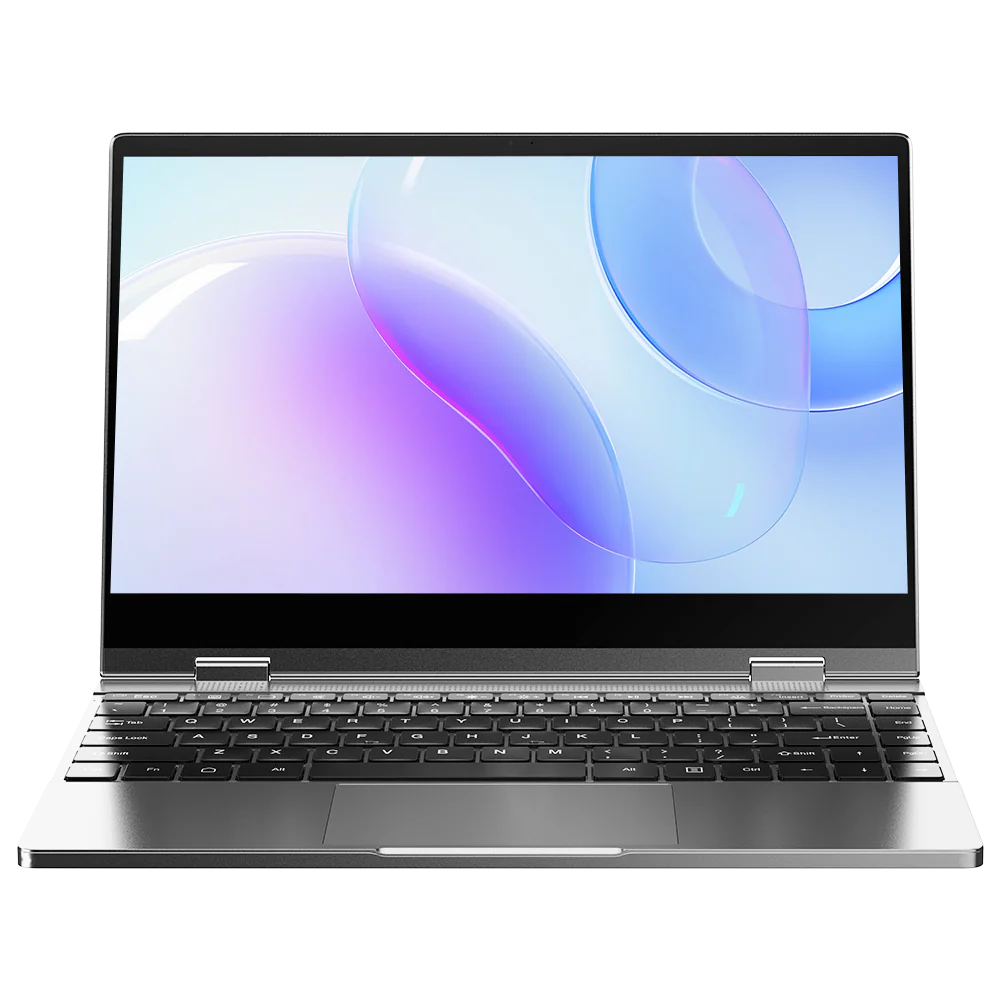
Remember back in the day? Gaming laptops were pretty simple: they were powerful, but they were also really thick and clunky. Think of carrying around a small cinder block, for instance. Well, those days are over. Now you’ve got tons of options. You’ve got the ones that are still all about performance—raw power no matter what the cost. But then you have others that focus on being slimmer, easier on your wallet, or just looking really cool. I mean now they even make gaming tablets and those 2-in-1 gaming laptops.

All those choices are awesome, but they also make picking a new gaming laptop in 2025 way harder than it used to be. Sure, grabbing something from a “Best Of” list is a solid start, but you might still end up with something that’s not perfect for you. No need to sweat. Here’s a guide to help you pick the best gaming laptop that really suites you. Don’t worry. Let’s take this walk together until you are fully aware on how to choose a gaming laptop.


How to Choose a Gaming Laptop: Ultimate Guide (2025)


Size Matters (14-inch vs. 16-inch vs. 18-inch)


Let’s start about the physical “size” of the laptop, which is almost always the diagonal measurement of the screen. In 2025, you’ll mainly see three main display sizes across all the big brands: 14-inch, 16-inch, and 18-inch. Each one is built for a totally different lifestyle.

1. The 16-inch – The Common Size

A 16-inch gaming laptop has basically become the new standard, replacing the old 15.6-inch models. Why is it so popular? This size offers the perfect amount of physical space for powerful components. Better space means better cooling, which means your GPU and CPU can run faster for longer without overheating. Most 16-inch models use the modern 16:10 aspect ratio, giving you a little extra vertical screen space compared to the old format. You can find these in relatively thin and sleek designs (like the Razer Blade 16 or Asus ROG Zephyrus G16) or chunky, powerful desktop replacements (like the Lenovo Legion Pro 5 or Asus ROG Strix G16). It truly is the happy medium.

2. The 14-inch – The Compact Size

These are the newest kids on the block, and they’re built for people who are always moving. Think of this as the “Ultrabook” of gaming laptops. They are super light, compact, and fit easily into small backpacks. You sacrifice a little bit of power and thermal performance for portability, meaning a 14-inch laptop with an RTX 5070 might not perform quite as well as a 16-inch laptop with the exact same GPU. The main standouts are the Razer Blade 14 and the Asus ROG Zephyrus G14, but keep an eye out for models like the HP Omen Transcend 14 and Acer Nitro 14. These are perfect if you prioritize travel.

3. The 18-inch – The Desktop Replacement

The 18-inch gaming laptops are the complete opposite of the 14-inch ones. These are basically portable desktops. They’re often thick, heavy, and a pain to lug around—definitely not meant for daily travel. If you plan to leave your laptop at your desk most of the time and you don’t use an external monitor, the massive 18-inch display is awesome. Plus, they usually have the most headroom for extreme cooling and the absolute fastest flagship components. Look for beasts like the Asus ROG Strix Scar 18 or the MSI Titan 18 HX AI. These are for gamers who want zero performance compromises.


The Real Engines: GPU, TGP, and CPU


Okay, let’s dive into one of the most important things of gaming laptops, and that’s the performance. When you’re talking about pure gaming horsepower, you’re talking about the Graphics Card (GPU) and the little-known secret spec that controls it.

1. GPU – Your Graphics Card is the Star

When you want to run 3D games, you absolutely need a discrete GPU (meaning a separate, dedicated chip, not the one built into the CPU). In 2025, that almost always means choosing an NVIDIA card, specifically from the newest RTX 50-series lineup. These range from the RTX 5090 (the absolute best) down to the RTX 5050 (the budget champion), with many models in between (5080, 5070 Ti, 5070, 5060). As you move up the numbers, the performance and the price climb step-by-step—which is what you’d expect.

This is the most important thing to know! VRAM is the dedicated memory just for the graphics card. For serious gaming in 2025, more VRAM is better. The top-tier cards (5090 with , 5080 with , and 5070 Ti with ) all got nice VRAM bumps over the previous generation. But here’s the kicker: the popular cards like the 5070, 5060, and 5050 are often still limited to of VRAM. This means the performance difference between a 5070 and a 5070 Ti can be bigger in some games than the jump from a 5060 to a 5070! If you play huge, texture-heavy open-world games, that extra VRAM can be a game-changer. Remember that a laptop GPU is not the same as the desktop version, even if it has the same name. They’re built differently for power efficiency.

2. TGP – The Secret Sauce You Must Check

This is the most critical and often hidden spec. TGP (Total Graphics Power) is the amount of electrical power (measured in watts) that the laptop is feeding your GPU. Think of it this way. You could have two different laptops that both advertise an RTX 5060. But if one feeds it the maximum watts (like a Lenovo Legion 7i Gen 10), and the other only feeds it watts (like a Gigabyte Aero X16), the laptop will be significantly faster—even though they have the exact same GPU name. Because retailers don’t always list this clearly, you have to do some digging. Always check the manufacturer’s specs or a detailed review to find the maximum TGP rating before you buy. Don’t waste money on a laptop that chokes the power to your GPU.

3. CPU – The Brain of the Operation

While the GPU handles the graphics, the CPU (Central Processing Unit) handles everything else—like game logic, physics, and pushing those high frame rates in competitive games. Both Intel and AMD have awesome options:

  • Intel’s latest and newest Intel Core Ultra Series 2 H or HX chips.
  • AMD’s latest has its third-gen Ryzen AI chips, like the Ryzen AI 9 365 or Ryzen AI 9 HX 375.
  • The “HX” stands for “Higher Wattage.” These are the beast CPUs, running up to watts, and they offer the best raw performance for gaming and multitasking.
  • If you want the absolute fastest gaming performance right now, some high-end machines are using the ‘AMD Ryzen 9 9955HX3D’.
  • Intel’s non-HX chips tend to give you slightly better battery life when you’re just doing normal tasks, while AMD’s chips are often favored for pure gaming speed.

4. What About Older Laptops?

You might find a great deal on a discounted older machine, but be careful. I generally wouldn’t recommend buying anything older than the RTX 40-series GPU. These cards came out in 2023, so if you’re buying a -series or earlier, you’re getting hardware that’s quickly aging out of being able to handle modern games well. If you find a ridiculously good discount on a 2024 high-end model, go for it—but if the discount isn’t huge, stick with the new -series cards. 


Memory – New Standards and Exceptions

You’ll be happy to know that 16 GB of RAM is pretty much the bare minimum for new gaming laptops now—even the cheaper ones! We’re past the days of struggling with 8 GB. Honestly, a lot of companies are even jumping up to 32 GB because modern games just love to hog on memory. There’s one weird little exception I found, though: the HP Victus 15. That one starts with only 8 GB of RAM paired with an RTX 5050, since it’s their budget model.

And the price to upgrade? Depends on the brand really. For instance, gaming laptops from ‘Razer’ will charge you US$ 300 to upgrade from 16GB to 32GB. Whereas, ‘Dell’ will only charge you US$100 which is a better offer, even ‘Best Buy’ retail outlets charges the same price to upgrade gaming laptops.    

Is it some thing you can do? This is a tricky one. Newer gaming laptops nowadays are soldered onto the motherboard which makes it impossible for you to upgrade. That’s usually the case with the lightweight gaming laptops from brands such as ‘Razer’. However, not all is lost. Many still let you swap out the RAM, which is awesome. The ROG Strix G16, Alienware 16 Aurora, and MSI Titan 18 HX are a few examples. If you can do it yourself, you can snag faster RAM cheaper and install it—way better than paying the company’s price upfront.


Storage – Big Games Need Big Space

When it comes to storage, 512 GB is still the standard size you’ll see on most models. But some of the more premium laptops are starting to use 1 terabyte (TB) as the baseline (Razer, for example, started doing this a while ago). Listen, nowadays modern AAA games are absolutely massive, so while you’ll definitely end up using an external drive eventually for your collection, having that 1 TB inside from the start is super handy. 

Good news, though: most gaming laptops make it easy to upgrade the storage yourself! They often even come with a second empty M.2 slot for another SSD. Just like with RAM, buying your own storage later is almost always way cheaper than adding it when you configure your laptop. So, the takeaway is: If a laptop lets you upgrade, go for the cheaper base option and do the RAM/storage yourself later to save a bunch of cash.


Display – The Window to a Gaming Experience

You shouldn’t skimp on your gaming laptop’s display. Seriously, unless you’re planning to only plug it into a separate external monitor (if that’s the case, get a desktop gaming PC), that display is your window into all your awesome games. Besides the size, which we already talked about, there are three main things to think about for a gaming laptop display: screen resolution, refresh rate, and the screen type.  

1. Screen resolution – Sharpness VS Speed

These days, gaming laptops usually rock screens that are , , or even . You might occasionally see an old-school screen too, which is Full-HD. More pixels means a much sharper image, which is a big deal in games. But here’s the catch: more pixels also means your gaming laptop has to work way harder to give you those high frame rates. Sure, you can lower the in-game resolution to boost your frame rate, but then you’re paying for those extra pixels you aren’t even using.

2. Refresh Rate – Smoothness is Key

The refresh rate is just as important, if not more! The good news is that all modern gaming laptops blow past the standard 60 Hz mark, which are common in nongaming laptops. The new standard nowadays is usually 120 Hz or 144 Hz, and for the faster top-range gaming laptop options, they come with 240 Hz, or 360 Hz, or even 500 Hz. Laptop makers are generally pretty good about matching the screen’s resolution and refresh rate to the laptop’s power, but sometimes you’ll have to choose: do you want a higher resolution or a higher refresh rate?

3. Screen Type – Getting to the Good Stuff

The last one is the panel or screen type, and this is where things get really exciting! While IPS screens are still the norm, the higher-end laptops are starting to use Mini-LED or OLED. 

Why is this awesome? Firstly, these panels have better colors and are more vivid. Secondly, they deliver way better HDR performance. Many of them, even the OLEDs, can hit over 1,000 nits of peak HDR brightness. This really makes the lighting in games look incredible and lifelike. If you haven’t gamed in HDR on a laptop yet, you’re in for a treat! The best part is that, unlike something like ray tracing, it doesn’t slow down your performance at all. And lastly, OLED screens also give you much faster response times, which makes for super responsive gaming. So, which feature matters the most to your gaming style: a super-sharp picture, buttery-smooth frame rates, or those vibrant, next-level colors?


Choose Your Brand

Getting excited? Good. Now let’s check on which brands to look out for when getting a gaming laptop. From Asus to Lenovo, to even Dell, if you want a great gaming that suits your needs, then the following brands will.  


1. Asus ROG or TUF


Let’s start with the Asus brand.  On the surface, it looks like they only have two main groups: ROG (Republic of Gamers) and TUF. But trust me, ROG is huge! It actually has three whole families of laptops nested inside it: ROG Zephyrus, ROG Flow, and ROG Strix. Let’s check them out! 

1. ROG Zephyrus: Thin and Mighty

This is the flagship line for Asus. They’ve actually focused their attention lately on just the super popular ROG Zephyrus G14 and G16. These are some of the thinnest gaming laptops you can buy, but don’t let the size fool you—they pack serious power which means serious performance! You can get them with high-end features like OLED screens and GPUs all the way up to an RTX 5090. They also have a very clean, simple, and minimalist design (maybe a little inspiration from Razer?), which makes them perfect if you need one machine for both school/work and serious gaming.

2. ROG Strix: Pure Performance

This ROG Strix is all about raw power. This is where you’ll find Asus’s more traditional, slightly thicker gaming laptops. The prices can vary a lot here. For example, you can grab an affordable option like the ROG Strix G16 with an RTX 5050 starting around . These are the workhorses built to maximize performance.

3. TUF – The Budget-Friendly Option

TUF Gaming is the line for people just getting into PC gaming, their entry-level brand. They used to be some of the cheapest gaming laptops around, but the prices have gone up a bit over the last few years. Right now, you won’t find any brand-new Asus gaming laptops with the latest RTX 50-series GPUs for under . But hey, if you look around on places like Amazon or Best Buy, you can usually find some older models for less cash. So, which group sounds more like your style: the slim and sleek Zephyrus or the power-focused Strix?


2. Lenovo


Legion – The Premium

Let’s move on to Lenovo gaming laptops. It wasn’t that long ago that Lenovo wasn’t really a player in the gaming scene. But everything changed back in 2016 when they launched the ‘Lenovo Legion’ brand. They’ve really picked up speed since then and are now on their tenth generation of some of these machines across the standard ‘Legion’ and ‘Legion Pro’ series. You can grab them with either Intel or AMD processors, and the prices cover a huge range—from around US all the way up to over US.

What’s cool about Legion laptops is that while they might not always be the flashiest or thinnest designs, they give you decent performance for your money. And because they don’t obsess over being ultra-thin, they usually have great thermals, which means they stay cooler when you’re pushing them hard—that’s really important for long gaming sessions.

LOQ – The Budget-Friendly

And the budget gaming market, Lenovo recently launched the ‘LOQ’ series (it’s pronounced “Lock”) in 2023, replacing their older “IdeaPad Gaming” line. For now, LOQ laptops stick to more entry-level GPUs, like the RTX 4050, 4060, 5050, and 5060.

They have one little quirk, though: they still use the older 16:9 aspect ratio screens, which means you get a little less vertical screen space and a larger bezel (the frame) at the bottom compared to most competitors. But they’re one of the few brands right now offering those very latest RTX 50-series GPUs in gaming laptops that cost less than —which is a great deal.

For me, I recommend starting with a budget-friendly option, something like the Lenovo LOQ 15 gaming laptop, if you’re new to gaming. If you want something more powerful, or extreme, then I recommend the Lenovo Legion Pro 7 gaming laptop.   


3. Alienware (Dell)


Alright, let’s talk about Dell’s gaming laptops. Honestly, their lineup is pretty streamlined these days. Everything falls under the Alienware brand, which Dell actually bought way back in 2006. Alienware has changed its look and feel a bunch of times over the years, but right now (in 2025), they’re keeping things simple with just four laptops in the main stack: the Alienware 16 Aurora, the 16X Aurora, the 18-inch Area-51, and the 16-inch Area-51.

I actually like this new, simple approach. It focuses on what Alienware has always been known for: that bold, unapologetic gamer style and high-end performance. These aren’t machines that try to blend into an office. Now, if you’re looking for their more budget-friendly option, that would be the Alienware 16 Aurora. They’re trying to reach a wider audience with this one, and you can grab a version with an RTX 5050 starting at just right now. So, are you a fan of that classic, aggressive Alienware design, or do you prefer a cleaner look?


4. HP


HP Omen – The Premium

The Omen brand has been around for ages—over ten years now—but it really feels like HP has been hitting its stride and gaining a lot of traction with it recently. What’s cool is how they organize their options: they basically break them down by how thick they are and, consequently, how much power they can cram inside. Here are the most recognizable models:

  • Omen Max – This is the absolute unit, the chunkiest one at almost an inch thick. It’s built for power, supporting GPUs all the way up to an RTX 5080.
  • Omen 16 – This is the solid middle ground. It’s less thick than the Max, and its power tops out with the RTX 5070.
  • Omen Transcend – This is the slim model, bringing the thickness down to just inches! It still manages to support up to an RTX 5070, and you can even get it in a smaller 14-inch model.

While you can find 16-inch options across all three sub-brands, none of them are quite as razor-thin as some of the competitors out there. 

HP Victus – The Budget Brand

Victus Apart from Omen, HP also has the Victus sub-brand, which they launched back in 2021. This is their go-to for budget-friendly options. Right now, they only have a few configurations available for the HP Victus 15 and Victus 16. So, if you were shopping for an HP, would you go Max power, or Transcend slimness?


5. Other Brands

Acer

The Acer gaming laptop series covers popular names like Nitro, Predator Helios, and Predator Triton.  The Predator Helios series includes high-end gaming laptops that are performance-driven with many size models starting from 14-inch, to 16-inch, and to the massive 18-inch. The Nitro series are the budget-friendly models which include entry-level gaming hardware. And the Predator Triton are the thin lightweight gaming laptop models.  


MSI

They’ve seriously made a huge splash in the gaming world, especially with their ridiculously powerful, high-performance monster laptops—the kind that are built for pure speed, like the MSI Titan HX. But here’s where it gets a little crazy: beyond that top-tier Titan, MSI has a ton of other options. You’ll find laptops in their lineup called the Raider, Stealth, Vector, Katana, Sword, and even their more budget-friendly Cyborg series. Honestly, they have a mind-boggling amount of choices! You could spend a week just trying to sort through them all. Have you ever looked at their lineup before? It’s intense!


Razer

Unlike most of the other companies we’ve talked about, Razer is totally dedicated to PC gaming—that’s all they do. Their ‘Razer Blade’ gaming laptops have become seriously famous in the gaming industry, mostly because of their iconic look and dark design, and rock this amazing clean, minimalist aesthetic that really stands out. Razer keeps the lineup simple: you’ve got the Blade 14, Blade 16, and Blade 18. They all share the exact same design, but you step up in size and power as you go from the 14-inch to the 18-inch. They’re basically the luxury sports car of the gaming laptop world.


Non-Gaming Laptops

Just because there’s a huge world of dedicated gaming laptops out there, it doesn’t mean those are your only options for playing games. You can often play games perfectly well on high-end laptops that have a dedicated graphics card, even if they’re actually marketed toward creative professionals (the people who need better graphics for video editing and design apps). We’re talking about laptops like the Dell 14 Premium, Acer Swift X 14, and the Asus ProArt P16.

However, if your main reason for buying a laptop is gaming, I’d probably steer clear of these. Why? They generally don’t support the crazy high-end GPUs like the RTX 5080 or 5090, and you usually won’t get refresh rates faster than . But if you’re a casual gamer who just wants a premium laptop that can seriously do everything—work, school, and some solid gaming—these are fantastic. They’re especially great if you can’t stand that flashy “gamer” look and prefer something more subtle and sleek. 


Cloud Gaming – The Future on Gaming

Choosing Your Retail

Alright, let’s talk about where you should actually buy your perfect gaming laptop and how to snag the best deal. Buying directly from the manufacturer (like Asus, Dell, Lenovo, etc.) is always the safest bet—you know exactly what you’re getting. But let’s be real, you want to find the best deals, am I right? So you need to check out third-party stores. 

First option is Best Buy. They have the best selection of gaming laptops, hands down. Plus, they do a good job filtering out junk from random brands, and they often have some seriously good sales. This is a great starting point.

Next is Amazon. You can find deals here, but you need to be a little more careful. Seriously, searching “gaming laptops” can bring up some super-cheap machines that are total garbage and not worth your money. Stick to the name brands we mentioned, such as Legion, ROG, Alienware, etc.

Also, watch out for the “Renewed” label, as that means it’s a refurbished machine. And always, always check the seller to make sure you’re buying from the actual manufacturer’s official store on Amazon, not some random third party.

I’d also recommend peeking at Newegg and Walmart; they sometimes have some surprisingly good deals. Just know that Walmart has the same issue as Amazon with really cheap, misleading listings. Even Newegg leaves some questionable “gaming” laptops up there, so just be smart about what you click on.

If you’re lucky enough to have a computer outlet nearby (or a similar electronics store), you absolutely need to go! It’s the best place to actually get your hands on the latest gaming laptops, mess around with them, and get a proper feel before you drop a massive chunk of cash. And if you unsure, you can always ask them on their recommendations. You need to know if that keyboard feels right or if the screen looks as good in person as it does online.


Conclusion 

So there you have, your free complete guide on how to choose a gaming laptop. Whether you’re a budget conscious starter gamer or a pro gamer, there’s always a gaming laptop waiting out there for you. All you need to do is choose the one that suits you, according to your budget, and you can start gaming. It’s as easy as that. 

If you like this guide, please leave your comments below. Any questions you have, please leave them below as well and I’ll make sure I get back to you with an answer. It’s really great to hear from you. Thanks for your time and. Now go out there, and find your gaming laptop. With this guide you’re that much closer to finding your ideal gaming laptop. Stay safe. Until next time 🙂